How often should a ureteroscope be serviced?
Ureteroscopes are sophisticated medical devices used in urological procedures to diagnose and treat conditions within the urinary tract.…
Read article →

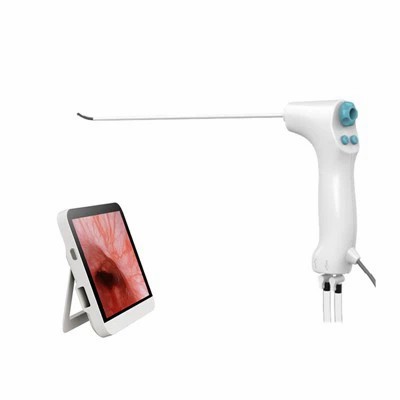
Hey there! As a supplier of hysteroscopes, I’ve been getting a lot of questions lately about whether a hysteroscopy can be used to treat uterine synechiae. So, I thought I’d dive into this topic and share some insights with you.
First off, let’s talk about what uterine synechiae are. Uterine synechiae, also known as Asherman’s syndrome, are adhesions or scar tissues that form inside the uterus. These adhesions can cause a range of problems, including irregular menstrual cycles, infertility, and recurrent miscarriages. They usually develop after a uterine surgery, like a dilation and curettage (D&C), or due to severe uterine infections.
Now, the big question: Can a hysteroscopy be used to treat uterine synechiae? The short answer is yes! Hysteroscopy is actually one of the most effective methods for diagnosing and treating uterine synechiae.
A hysteroscopy is a minimally invasive procedure that allows doctors to look inside the uterus using a hysteroscope. A hysteroscope is a thin, flexible tube with a light and a camera at the end. It’s inserted through the vagina and cervix and into the uterus, giving the doctor a clear view of the uterine cavity.
When it comes to treating uterine synechiae, the hysteroscope can be used in a couple of ways. First, it helps the doctor accurately diagnose the extent and location of the adhesions. This is crucial because different types and severities of adhesions may require different treatment approaches.
Once the adhesions are identified, the doctor can use specialized instruments that can be passed through the hysteroscope to cut or remove the scar tissues. This is called hysteroscopic adhesiolysis. It’s a precise procedure that can be done on an outpatient basis, which means the patient usually doesn’t have to stay in the hospital overnight.


One of the major advantages of using a hysteroscopy for treating uterine synechiae is that it’s minimally invasive. Compared to traditional open surgery, hysteroscopic adhesiolysis has fewer risks, less pain, and a shorter recovery time. Patients can often return to their normal activities within a few days.
Now, let’s talk about the different types of hysteroscopes that are available for this procedure. At our company, we offer a variety of high – quality hysteroscopes, including Flexible Hysteroscope and Disposable Hysteroscope.
Our Flexible Hysteroscope is a great option for this kind of procedure. Its flexibility allows it to navigate the uterine cavity more easily, providing a better view of hard – to – reach areas. This is especially important when dealing with complex adhesions. The flexible design also reduces the risk of trauma to the delicate uterine tissues.
On the other hand, our Disposable Hysteroscope offers several benefits as well. It eliminates the need for reprocessing, which saves time and reduces the risk of cross – contamination. This is a big plus in a clinical setting, where infection control is of utmost importance.
The success rate of hysteroscopic treatment for uterine synechiae is quite high. Many patients experience significant improvement in their menstrual cycles and fertility after the procedure. However, it’s important to note that the outcome can vary depending on the severity of the adhesions and other individual factors.
After the hysteroscopic adhesiolysis, patients may be prescribed medications to prevent the re – formation of adhesions. Hormonal therapies, such as estrogen, are often used to promote the growth of the uterine lining and reduce the risk of new scar tissue forming.
In some cases, follow – up hysteroscopies may be recommended to monitor the healing process and ensure that the adhesions haven’t come back. This is where our high – quality hysteroscopes really shine. They provide clear and detailed images, allowing doctors to make accurate assessments.
If you’re a medical professional looking for reliable hysteroscopes for treating uterine synechiae or other gynecological conditions, we’d love to talk to you. Our hysteroscopes are designed with the latest technology and are built to meet the highest standards of quality and performance.
Whether you’re interested in our Flexible Hysteroscope or Disposable Hysteroscope, we can provide you with all the information you need. We also offer excellent customer support and after – sales service.
So, if you’re in the market for a hysteroscope, don’t hesitate to reach out to us. We’re here to help you find the right solution for your practice. Let’s work together to improve the lives of patients suffering from uterine synechiae.
References
 Blog
Blog
 Blog
Blog
 Blog
Blog