What should be done after a Choledochoscope examination?
After a choledochoscope examination, several important steps and considerations are crucial for ensuring the patient’s well – being…
Read article →

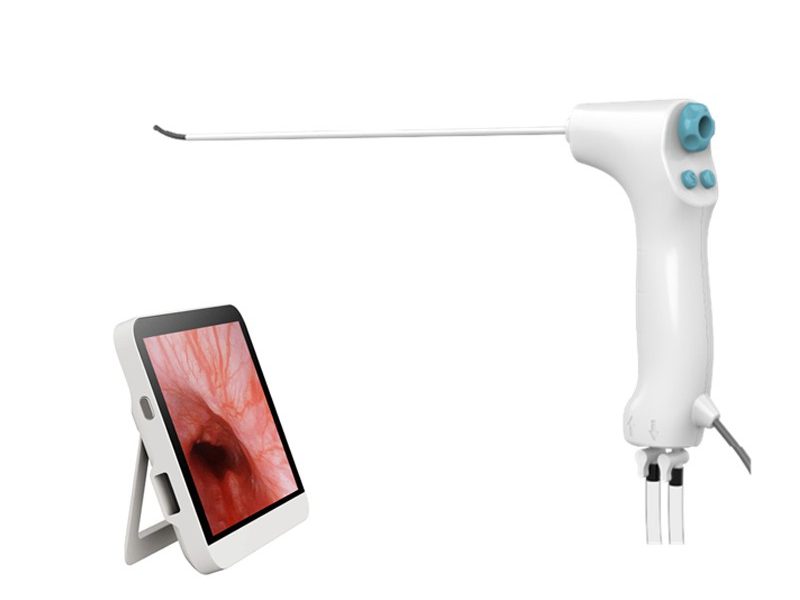
Hysteroscopy is a valuable diagnostic and therapeutic procedure in gynecology, offering insights into the uterine cavity and addressing various gynecological conditions. The choice between conducting hysteroscopy in an office – based or hospital – based setting can significantly impact the patient experience, procedure outcomes, and overall healthcare delivery. As a leading hysteroscope supplier, we understand the nuances between these two settings and are committed to providing high – quality hysteroscopes suitable for both environments.
Office – based hysteroscopy is often preferred by patients for its convenience. It can be scheduled more quickly, usually as an outpatient procedure during normal office hours. Patients do not need to go through the hassle of hospital admissions, which can involve long waiting times, paperwork, and potentially overnight stays. The office environment is generally more familiar and less intimidating than a hospital. Patients can return to their normal activities shortly after the procedure, minimizing disruption to their daily lives.
Moreover, the use of local anesthesia in office – based hysteroscopy reduces the risks associated with general anesthesia. This also means a faster recovery time, as patients are not affected by the post – anesthesia grogginess. For example, a patient with a busy work schedule can have an office – based hysteroscopy during a lunch break and resume work in the afternoon.
In contrast, hospital – based hysteroscopy may be more anxiety – inducing for some patients. The large, impersonal hospital setting, along with the presence of seriously ill patients, can create a stressful atmosphere. Hospital procedures often require more extensive pre – operative preparations, including fasting and multiple tests. However, for patients with complex medical conditions or those who are extremely anxious, the hospital environment can provide a sense of security. The availability of a full – service medical team and advanced life – support equipment can be reassuring, especially when general anesthesia is used.
Office – based hysteroscopy typically requires more compact and portable equipment. Our Portable Hysteroscope is specifically designed for this setting. It is lightweight and easy to maneuver, allowing gynecologists to perform the procedure efficiently in a small office space. These hysteroscopes often have built – in light sources and cameras, eliminating the need for bulky external equipment. Additionally, the use of disposable or single – use components, such as our Disposable Hysteroscope and Single Use Hysteroscope, reduces the risk of cross – contamination and simplifies the cleaning and sterilization process.
The technology in office – based hysteroscopes has advanced significantly in recent years. High – resolution imaging provides clear visualization of the uterine cavity, enabling accurate diagnosis of conditions such as polyps, fibroids, and adhesions. Some office – based hysteroscopes also support real – time image sharing, allowing for remote consultations with specialists if needed.
Hospital – based hysteroscopy can utilize more advanced and complex equipment. These hysteroscopes may be integrated with other surgical systems, such as robotic – assisted surgery platforms, for minimally invasive procedures. The hospital setting also allows for the use of larger, more powerful light sources and high – end cameras, which can provide even more detailed images. Additionally, hospitals have the infrastructure to support advanced diagnostic techniques, such as three – dimensional imaging, which can be particularly useful in cases of complex uterine abnormalities.
However, the cost of maintaining and upgrading this sophisticated equipment can be high. Hospitals also need to invest in extensive training for their medical staff to operate these advanced systems effectively.
Office – based hysteroscopy is most suitable for simple diagnostic procedures and minor therapeutic interventions. It can be used to diagnose conditions like abnormal uterine bleeding, suspected polyps, or intrauterine adhesions. Minor procedures, such as the removal of small polyps or the insertion of intrauterine devices, can also be performed in an office setting. The use of local anesthesia limits the duration and complexity of the procedure, as patients need to remain comfortable throughout.
The smaller size of office – based hysteroscopes may also restrict the range of instruments that can be used during the procedure. However, advancements in miniaturized surgical instruments are gradually expanding the capabilities of office – based hysteroscopy.
Hospital – based hysteroscopy is better equipped to handle complex procedures. For patients with large fibroids, severe intrauterine adhesions, or other complex anatomical abnormalities, the hospital setting provides the necessary resources and expertise. General anesthesia can be used, allowing for longer and more invasive procedures. Surgeons can use a wider range of surgical instruments and techniques, including laser ablation and myomectomy, to treat these complex conditions.
The hospital also has the ability to manage any potential complications that may arise during the procedure. In case of heavy bleeding, for example, the hospital has access to blood transfusions and a team of specialists to handle emergency situations.
Office – based hysteroscopy is generally more cost – effective than hospital – based hysteroscopy. The lower overhead costs in an office setting, including reduced staff and equipment expenses, translate into lower patient costs. Additionally, since patients do not require hospital admissions, there are no associated admission fees, room charges, or costs related to general anesthesia. This makes office – based hysteroscopy a more affordable option for patients, especially those without comprehensive insurance coverage.
From an insurance perspective, many insurance providers are increasingly recognizing the value of office – based procedures and are more likely to reimburse at a higher rate. This encourages patients to choose office – based hysteroscopy as a cost – saving alternative.
Hospital – based hysteroscopy is more expensive due to the higher costs associated with running a hospital. The cost of maintaining advanced equipment, providing round – the – clock medical care, and employing a large medical staff all contribute to the overall expense. Insurance reimbursement for hospital – based procedures may also be more complex, as it often depends on the patient’s insurance plan, the type of procedure, and the length of hospital stay.


Office – based hysteroscopy usually requires a smaller medical team. A gynecologist, along with a nurse or medical assistant, is typically sufficient to perform the procedure. The staff in an office setting is trained to handle routine hysteroscopy procedures and basic patient care. They are also well – versed in providing a comfortable and reassuring environment for patients.
However, in case of unexpected complications, the office staff may need to rely on external support from a hospital or a specialist. This highlights the importance of having a well – established referral system in place.
Hospital – based hysteroscopy involves a larger and more specialized medical team. In addition to gynecologists, there are anesthesiologists, nurses, surgical technicians, and other support staff. This multi – disciplinary team is trained to handle a wide range of complex cases and potential complications.
The hospital also provides continuous training and professional development opportunities for its staff, ensuring that they stay updated with the latest advancements in hysteroscopy techniques and technology.
As a leading hysteroscope supplier, we offer a wide range of high – quality hysteroscopes suitable for both office – based and hospital – based settings. Whether you are looking for a Portable Hysteroscope for your office practice or advanced equipment for your hospital, we have the solutions to meet your needs.
If you are interested in learning more about our products or would like to discuss a potential procurement, please feel free to reach out to us. We are committed to providing excellent customer service and helping you make the best choice for your medical facility.
 Blog
Blog