What is the recovery process after a ureteroscope laser procedure?
Going through a ureteroscope laser procedure can be a nerve – wracking experience. I’m in the business of…
Read article →

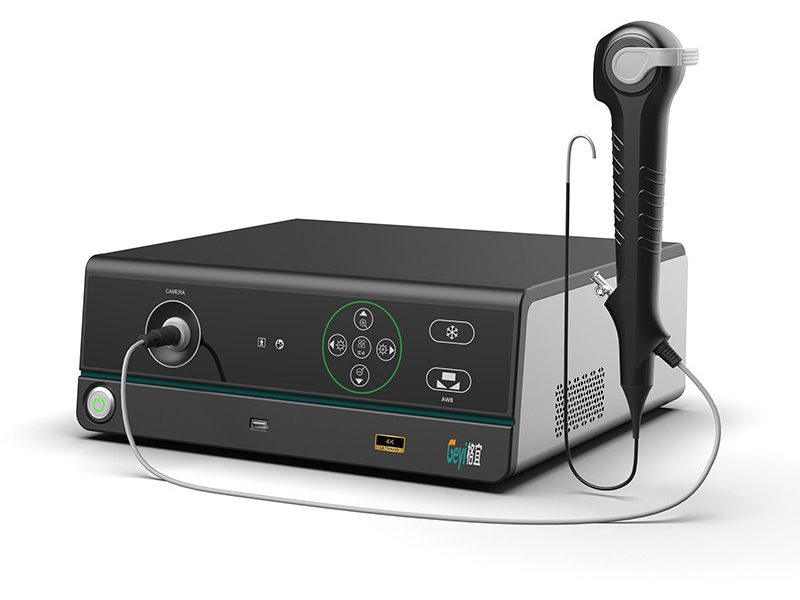
In the medical field, endoscope systems have become indispensable tools for diagnosis and treatment. These systems allow doctors to visualize internal organs and tissues in real – time, providing valuable insights for medical decision – making. One crucial aspect of endoscope systems is image compression technology, which plays a vital role in ensuring high – quality image transmission and storage. As a leading supplier of endoscope systems, I am here to shed light on the image compression technology used in these systems.
Endoscope systems generate a large amount of high – resolution image and video data. Without proper compression, transmitting and storing this data would be extremely challenging. Firstly, in terms of transmission, medical facilities often need to transfer endoscope images and videos from the examination room to other locations, such as a doctor’s office or a remote diagnostic center. High – speed data transfer is essential for timely diagnosis, but the bandwidth of the network is limited. Image compression reduces the data size, enabling faster and more efficient transmission over existing networks.
Secondly, storage is another significant issue. Medical institutions need to store a vast amount of patient data for future reference, research, and legal purposes. Compressed images and videos take up less storage space, which helps to reduce the cost of storage infrastructure and makes it easier to manage large – scale medical databases.
JPEG (Joint Photographic Experts Group) is one of the most widely used image compression standards. It is a lossy compression method, which means that it sacrifices some image quality to achieve high compression ratios. In endoscope systems, JPEG compression is often used for still images.
The principle of JPEG compression is based on the fact that the human eye is less sensitive to high – frequency details in an image. JPEG divides the image into small blocks, applies a discrete cosine transform (DCT) to each block, and then quantizes the DCT coefficients. By reducing the precision of the high – frequency coefficients, the data size can be significantly reduced.


For endoscope still images, JPEG compression can achieve compression ratios of up to 10:1 or even higher without significant loss of diagnostic information. For example, when capturing a clear image of a lesion in the digestive tract, JPEG compression can compress the original high – resolution image to a much smaller size while still maintaining the key features of the lesion, such as its shape, color, and texture.
H.264/AVC (Advanced Video Coding) is a popular video compression standard. It is also a lossy compression method but offers excellent compression efficiency and high – quality video output. In endoscope systems, H.264/AVC is commonly used for video streaming and recording.
H.264/AVC uses a hybrid coding scheme that combines spatial prediction, temporal prediction, and entropy coding. Spatial prediction reduces the redundancy within a single frame by predicting the pixel values based on neighboring pixels. Temporal prediction takes advantage of the similarity between consecutive frames in a video sequence, which can significantly reduce the amount of data needed to represent the video.
In an endoscope video, such as a laparoscopic procedure, H.264/AVC can compress the video data to a fraction of its original size while maintaining smooth motion and clear details. This allows for real – time video streaming during the operation, enabling remote medical experts to provide timely advice and guidance.
HEVC, also known as H.265, is the successor to H.264/AVC. It offers even higher compression efficiency than H.264/AVC, which means that it can achieve the same or better video quality at a lower bit rate.
HEVC uses more advanced coding techniques, such as larger block sizes, more sophisticated prediction modes, and improved entropy coding. In endoscope systems, HEVC compression can be particularly beneficial for high – definition and ultra – high – definition video applications. For example, in a Video Endoscopy System with 4K resolution, HEVC can compress the video data to a manageable size without sacrificing the high – quality visual experience.
The primary goal of image compression in endoscope systems is to balance data reduction and image quality. Medical diagnosis often requires high – quality images with accurate color representation, sharp edges, and clear details. Therefore, the compression ratio needs to be carefully selected to ensure that the diagnostic information is not lost.
For example, in early cancer detection, even the slightest change in the appearance of cells or tissues can be crucial. In such cases, a lower compression ratio may be used to preserve the maximum amount of image information, even though it means a larger data size.
Many endoscope procedures, such as laparoscopic surgeries, require real – time image and video transmission. In these situations, the compression algorithm needs to be fast enough to process the data in real – time without introducing significant delays.
For instance, in a Laparoscopic Camera System, the surgeon needs to see the internal organs clearly and immediately during the operation. Any delay in image transmission can affect the surgical decision – making process and potentially compromise patient safety.
The available storage capacity in the endoscope system also affects the choice of compression technology. If the system has limited storage space, a more aggressive compression method may be preferred to store as many images and videos as possible.
On the other hand, if the storage capacity is sufficient, a lower compression ratio can be used to maintain higher image quality. For example, in a Portable Endoscope System, which usually has limited internal storage, a high – efficiency compression algorithm like HEVC can be very useful.
As a professional endoscope system supplier, we understand the importance of image compression technology. We have invested heavily in research and development to ensure that our endoscope systems use the most advanced and appropriate compression algorithms.
We conduct extensive testing and optimization to find the best balance between image quality, compression ratio, and real – time performance. Our engineers work closely with medical experts to understand the specific requirements of different medical applications and develop customized compression solutions.
For example, in our high – end endoscope systems, we use a combination of different compression technologies. For still images, we may use a high – quality JPEG compression algorithm with adjustable compression ratios, allowing doctors to choose the level of compression based on the diagnostic needs. For video, we use H.264/AVC or HEVC compression, depending on the resolution and real – time requirements of the system.
Image compression technology is a critical component of endoscope systems. It enables efficient data transmission and storage while maintaining high – quality images and videos for medical diagnosis. By understanding the different compression technologies, their advantages, and limitations, and the factors that affect compression, medical institutions can make more informed decisions when choosing endoscope systems.
If you are interested in our endoscope systems and want to learn more about our image compression technology, or if you are considering a purchase for your medical facility, we welcome you to contact us for further discussion and negotiation. We are committed to providing you with the best – in – class endoscope solutions to meet your specific needs.
 Blog
Blog
 Blog
Blog