What are the limitations of balloon catheter dilation with a flexible bronchoscope?
Balloon catheter dilation with a flexible bronchoscope is a commonly used minimally invasive procedure in the field of…
Read article →

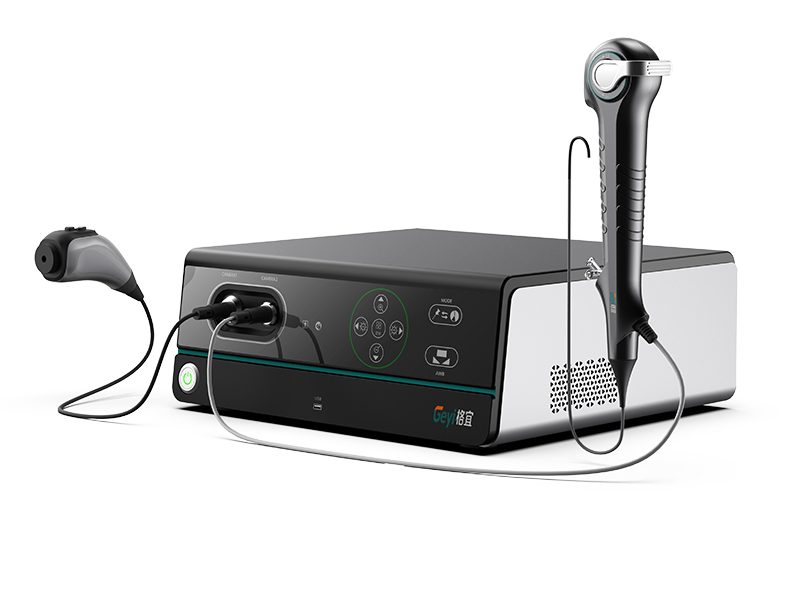
The spectral response of the endoscopy camera system’s sensors is a crucial factor that determines the quality and effectiveness of endoscopic imaging. As a leading supplier of Endoscope Camera System, we understand the significance of this concept and its impact on the performance of our products. In this blog post, we will delve into the details of the spectral response of endoscopy camera system sensors, exploring what it is, why it matters, and how it influences the overall imaging capabilities of our systems.
Spectral response refers to the way a sensor in an endoscopy camera system responds to different wavelengths of light. In simple terms, it describes how sensitive the sensor is to various colors or parts of the electromagnetic spectrum. Just like our eyes are more sensitive to certain colors than others, the sensors in endoscopy cameras have their own unique spectral sensitivities.
Most endoscopy camera system sensors are designed to respond to the visible light spectrum, which ranges from approximately 400 to 700 nanometers (nm). However, they may also have some sensitivity to near – infrared (NIR) light, which has wavelengths longer than 700 nm. The spectral response of a sensor is typically represented by a graph, where the x – axis shows the wavelength of light and the y – axis shows the relative sensitivity of the sensor at each wavelength.
The spectral response of the endoscopy camera system’s sensors is of utmost importance for several reasons. Firstly, it directly affects the color accuracy of the images captured. Different tissues in the human body have distinct spectral absorption and reflection characteristics. For example, blood appears red because it absorbs and reflects light in a specific way within the visible spectrum. A sensor with a well – calibrated spectral response can accurately capture these color differences, allowing doctors to easily distinguish between healthy and diseased tissues.
Secondly, the spectral response can influence the contrast and visibility of the images. By being more sensitive to certain wavelengths, the sensor can enhance the details in the image. For instance, in some cases, highlighting the contrast between the surface of a tissue and its underlying structures can help in the early detection of abnormalities.
Finally, the ability of the sensor to respond to near – infrared light can be beneficial for special imaging techniques. NIR light can penetrate deeper into tissues compared to visible light, enabling the visualization of structures that are not easily seen with visible light alone. This can be particularly useful in procedures where a more in – depth view of the tissue is required.
Several factors can affect the spectral response of endoscopy camera system sensors. One of the main factors is the type of sensor material used. Different materials have different electronic properties, which determine their sensitivity to different wavelengths of light. For example, charge – coupled device (CCD) sensors and complementary metal – oxide – semiconductor (CMOS) sensors, which are commonly used in endoscopy cameras, may have slightly different spectral responses due to their material differences.
The design of the sensor also plays a role. The presence of color filters on the sensor can modify its spectral response. These filters are used to separate the incoming light into different color components (such as red, green, and blue) so that a full – color image can be reconstructed. The quality and characteristics of these filters can significantly impact the overall spectral response of the sensor.
Another factor is the coating on the sensor. Some sensors are coated with special materials to enhance their sensitivity to certain wavelengths or to protect them from damage. These coatings can alter the spectral response of the sensor in a controlled manner.
As a supplier of Endoscope Camera System, we take a comprehensive approach to optimizing the spectral response of our sensors. We start by carefully selecting the sensor materials. Our R & D team conducts extensive research to identify the materials that offer the best combination of sensitivity, color accuracy, and durability.
We also invest in advanced manufacturing processes to ensure the precise fabrication of the sensors. This includes the accurate placement of color filters and the application of high – quality coatings. Our quality control measures are strict, and each sensor undergoes rigorous testing to ensure that its spectral response meets our high standards.
In addition, we are constantly exploring new technologies and techniques to improve the spectral response of our sensors. For example, we are researching the use of multi – spectral imaging, which combines the information from different spectral bands to create more detailed and informative images.
Our endoscopy camera systems with different spectral responses are suitable for a wide range of applications. For general diagnostic endoscopy, a sensor with a balanced spectral response across the visible spectrum is ideal. This allows for accurate color reproduction and clear visualization of the anatomical structures. Our Video Endoscopy System is equipped with sensors that have excellent spectral response characteristics for such applications.
In cases where the detection of specific biomarkers or the use of fluorescence imaging is required, sensors with enhanced sensitivity to near – infrared or specific wavelengths in the visible spectrum can be used. These sensors can be integrated into our Portable Endoscope System, which offers flexibility and convenience for on – site or point – of – care diagnostics.


To ensure that our endoscopy camera system sensors have a high – quality spectral response, we follow a strict quality control process. First, we source the best raw materials from reliable suppliers. Our engineers work closely with the material manufacturers to understand the properties of the materials and how they can be optimized for our sensors.
During the manufacturing process, we use state – of – the – art equipment to fabricate the sensors. We have a clean – room environment to prevent contamination, which can affect the performance of the sensors. Each step of the manufacturing process is closely monitored, and any deviations are immediately addressed.
After the sensors are manufactured, they undergo a series of tests. We use specialized equipment to measure the spectral response of each sensor and compare it with our pre – defined standards. Only sensors that meet these standards are used in our endoscopy camera systems.
If you are in the market for a high – quality endoscopy camera system, we invite you to contact us for a detailed discussion. Our team of experts is ready to assist you in selecting the right system based on your specific requirements. Whether you need a system for general diagnostics, specialized imaging, or portable use, we have the solutions to meet your needs. We are committed to providing you with the best products and services, and our endoscopy camera systems with optimized spectral response will surely enhance your diagnostic capabilities.
 Blog
Blog
 Blog
Blog