Can a portable hysteroscope be used for diagnosing adenomyosis?
Adenomyosis is a prevalent gynecological condition characterized by the presence of endometrial glands and stroma within the myometrium.…
Read article →

The field of medical equipment has witnessed remarkable advancements in recent years, especially in the realm of bronchoscopes. Bronchoscopes are essential tools used in diagnosing and treating various respiratory conditions. They come in different types, including portable and regular ones. As a supplier of Portable Bronchoscope, I am often asked about the differences in the cleaning processes between portable and regular bronchoscopes. In this blog post, I will delve into the nuances of these cleaning processes, highlighting the unique aspects of each.
Before we explore the differences, it’s important to understand the general principles of bronchoscope cleaning. Bronchoscopes are delicate and complex medical devices that come into contact with the patient’s respiratory tract. Therefore, proper cleaning is crucial to prevent the transmission of infections and ensure the longevity of the device. The cleaning process typically involves several steps, including pre – cleaning, leak testing, manual cleaning, automated cleaning, disinfection, rinsing, and drying.
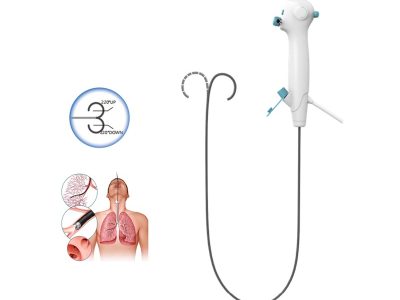
Regular bronchoscopes, such as Flexible Video Bronchoscope, are commonly used in hospitals and clinics. Their cleaning process is a well – established and often time – consuming procedure.
Immediately after use, the regular bronchoscope should be pre – cleaned. This involves wiping the external surface of the bronchoscope with a soft, lint – free cloth moistened with a suitable cleaning agent. The working channel is flushed with water to remove any visible debris, such as mucus or blood. This step is essential to prevent the drying of organic matter, which can be more difficult to remove later.
Before proceeding with further cleaning, a leak test is conducted on the regular bronchoscope. This is done using a dedicated leak testing device. A leak in the bronchoscope can compromise its functionality and pose a risk of cross – contamination. If a leak is detected, the bronchoscope should be repaired before continuing with the cleaning process.
Manual cleaning is a meticulous process that requires the use of specialized cleaning brushes and cleaning solutions. The internal channels of the bronchoscope are carefully brushed to remove any remaining debris. The external surface is also thoroughly cleaned. This step is often carried out in a dedicated cleaning sink to ensure proper disposal of the cleaning waste.
After manual cleaning, the regular bronchoscope is placed in an automated endoscope reprocessor (AER). The AER uses a combination of detergents, water, and heat to clean and disinfect the bronchoscope. The process is programmed to follow specific cycles, which can take up to an hour or more, depending on the model of the AER and the manufacturer’s instructions.
Following automated cleaning, the bronchoscope undergoes a disinfection process. High – level disinfection is typically required for bronchoscopes, as they come into contact with mucous membranes. Chemical disinfectants, such as glutaraldehyde or peracetic acid, are commonly used. The bronchoscope is immersed in the disinfectant solution for a specified period, usually around 20 – 30 minutes, to ensure the inactivation of microorganisms.
After disinfection, the bronchoscope is thoroughly rinsed with sterile water to remove any traces of the disinfectant. This step is crucial to prevent the irritation of the patient’s respiratory tract during subsequent use.
Finally, the bronchoscope is dried using a forced – air dryer. The internal channels are flushed with air to remove any remaining moisture, which can promote the growth of bacteria. The external surface is also dried with a clean, lint – free cloth.
Portable bronchoscopes offer greater flexibility and convenience, especially in point – of – care settings. However, their cleaning process also has some distinct features.


Similar to regular bronchoscopes, portable bronchoscopes should be pre – cleaned immediately after use. The external surface is wiped with a cleaning cloth, and the working channel is flushed with water. However, due to their portability, portable bronchoscopes may be used in less – controlled environments, which means that the pre – cleaning step may need to be more thorough to remove any additional contaminants.
Leak testing is also an important step for portable bronchoscopes. Many portable bronchoscopes are designed with built – in leak detection systems or are compatible with simplified leak testing devices. This allows for quick and easy leak detection, which is essential for maintaining the integrity of the device.
Manual cleaning of portable bronchoscopes is generally similar to that of regular bronchoscopes. However, portable bronchoscopes may have more compact designs, which can make the manual cleaning process more challenging. Specialized, smaller – sized cleaning brushes may be required to reach all the internal channels.
Some portable bronchoscopes are compatible with smaller, portable automated cleaning devices. These devices are designed to be more compact and user – friendly, making them suitable for use in different settings. The cleaning cycles of these portable automated cleaners are often shorter than those of traditional AERs, which can save time.
The disinfection process for portable bronchoscopes is also important, but the choice of disinfectant may be different. Due to the portability and potential for use in different locations, some portable bronchoscopes are designed to be compatible with less – toxic and more environmentally friendly disinfectants. This can reduce the risk of exposure to harmful chemicals for the operators.
Rinsing is a critical step to remove any disinfectant residues. Portable bronchoscopes may be rinsed using sterile water from a portable water supply, such as a sterile water bottle. This ensures that the bronchoscope is ready for use in various settings without the need for a dedicated rinsing sink.
Drying of portable bronchoscopes can be achieved using a portable air – drying device or by natural air – drying in a clean environment. The goal is to remove all moisture from the device to prevent the growth of microorganisms.
One of the most significant differences is the time and convenience factor. The cleaning process of regular bronchoscopes is often more time – consuming, especially when using a traditional AER. Portable bronchoscopes, on the other hand, can be cleaned more quickly using portable cleaning devices, which is beneficial in situations where rapid turnaround is required.
Regular bronchoscopes require a dedicated cleaning area with a large AER, a leak testing device, and a variety of cleaning brushes and solutions. Portable bronchoscopes, in contrast, can be cleaned with more compact and portable equipment, which makes them suitable for use in remote or mobile settings.
The choice of disinfectant may vary between the two types of bronchoscopes. Regular bronchoscopes often use traditional high – level disinfectants, while portable bronchoscopes may be designed to work with more user – friendly and environmentally friendly disinfectants.
Regardless of whether it is a portable or regular bronchoscope, proper cleaning is of utmost importance. Improper cleaning can lead to the transmission of infections, such as pneumonia or tuberculosis, which can have serious consequences for patients. It can also damage the bronchoscope, reducing its lifespan and increasing the cost of replacement.
In conclusion, the cleaning processes of portable and regular bronchoscopes have both similarities and differences. While both types of bronchoscopes require thorough pre – cleaning, leak testing, manual cleaning, disinfection, rinsing, and drying, the methods and equipment used can vary significantly. Portable bronchoscopes offer greater flexibility and convenience in cleaning, making them suitable for use in a wider range of settings. As a supplier of Portable Bronchoscope, I understand the importance of providing high – quality products and ensuring that our customers are well – informed about the cleaning processes.
If you are interested in learning more about our portable bronchoscopes or have any questions regarding their cleaning and maintenance, we encourage you to contact us for a purchase negotiation. Our team of experts is ready to assist you in finding the best solution for your needs.
 Blog
Blog
 Blog
Blog
 Blog
Blog