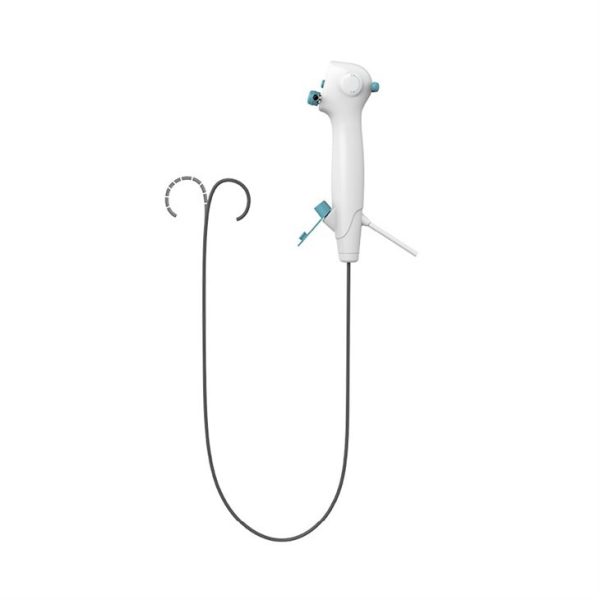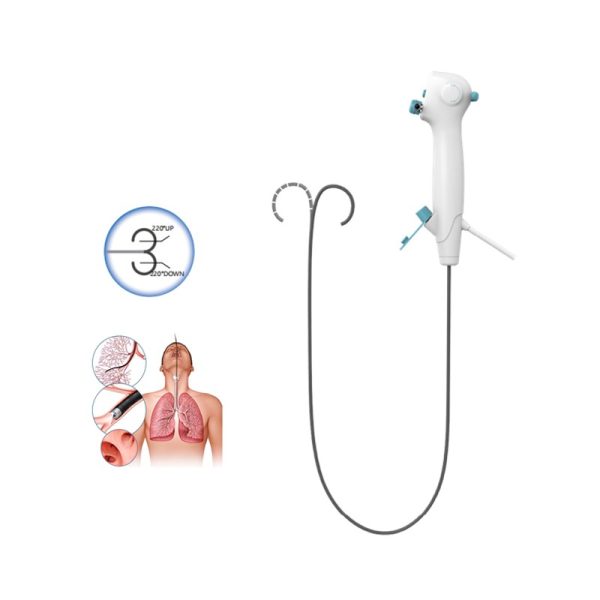
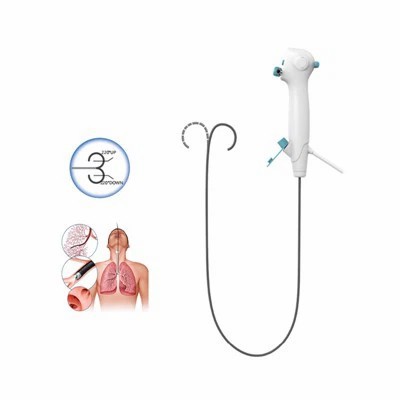
Disposable Bronchoscope
Disposable bronchoscope the risk of bronchoscopy-related infection compared with traditional reusable flexible bronchoscopes(RFB). At present, there is no comparative study between SFB and RFB in the aspects of biopsy and interventional therapy.
- ISO 13485
- FDA 510(k) clearance
- CE certification
- OEM / private label
Manufactured by Zhejiang Geyi Medical Devices Co., Ltd. under the Jumping Spider™ brand. Model-level certificates confirmed on request.
Product description
Disposable bronchoscope the risk of bronchoscopy-related infection compared with traditional reusable flexible bronchoscopes(RFB). At present, there is no comparative study between SFB and RFB in the aspects of biopsy and interventional therapy.
Your Leading Geyi Medical Devices Supplier
Zhejiang Geyi Medical Devices Co., Ltd. is a high-tech company integrating R & D, production, sales and service. It's headquartered in Jiande, Hangzhou City. The company has established a research and development and production base of 20000 m² in Jiande. It has a clean workshop of 5000 m² and a laboratory of 500 m². The company has a sound quality management system and equipment with a high degree of automation of production processes and testing methods, the company has successfully passed the "Medical Device Production Quality Control", "Management Standard" system assessment, and obtained ISO13485 medical device quality management system certification; Its product series of disposable trocars, digital endoscopes, electrocoagulation surgical instrument , surgical stapler series, endoscopic image camera systems, medical equipment have obtained domestic registration certificates and EU CE certificates.
Why Choose Us
Competitive price
We have a professional purchasing team and costing team,trying to reduce costs and profits,and provide you with a good price.
24h online service
You can contact us to inquire about pre-sales, sales, and after-sales services, and we will give you a very satisfactory.We are at your service online 24 hours a day.
Quality control
For each process,we have strict inspection standards,and we always insist that quality is life.
One-stop Solution
With rich experience and one-to-one service,we can help you choose products and answer technical questions.

Single use bronchoscope is a minimally invasive diagnostic procedure that utilizes a flexible tube with a small camera to examine the respiratory system. One of the most significant advantages of using disposable bronchoscopes is minimizing the risk of infection. Infections can easily spread through contaminated medical equipment, particularly when the equipment is not thoroughly cleaned and disinfected.

A single use bronchoscope is a medical instrument designed for one-time use during bronchoscopy procedures. It is intended to minimize the risk of cross-contamination between patients and reduce the need for sterilization or disinfection. Single use bronchoscopes are made of disposable materials such as plastic and are discarded after each use, which makes them cost-effective and easy to use.

Disposable bronchoscope is a minimally invasive diagnostic procedure that utilizes a flexible tube with a small camera to examine the respiratory system. It is a safe and effective procedure that allows doctors to diagnose and treat a variety of respiratory conditions, such as lung cancers and infections.

Portable bronchoscope is a minimally invasive diagnostic procedure that utilizes a flexible tube with a small camera to examine the respiratory system. It is a safe and effective procedure that allows doctors to diagnose and treat a variety of respiratory conditions, such as lung cancers and infections. During the procedure, patients are typically sedated to minimize any discomfort.

Disposable Fiberoptic Bronchoscope
Disposable fiberoptic bronchoscope is a minimally invasive diagnostic procedure that utilizes a flexible tube with a small camera to examine the respiratory system. It is a safe and effective procedure that allows doctors to diagnose and treat a variety of respiratory conditions, such as lung cancers and infections.

Bronchoscope flexible is a medical device used for respiratory system examinations. It is designed to be used only once and then discarded, as opposed to traditional bronchoscopes which require thorough sterilization before each use. This provides a safer and more efficient option for healthcare professionals when conducting bronchoscopy procedures.

Traditional bronchoscopes require frequent maintenance, which can cause delays and complications in a busy clinical setting. With flexible video bronchoscope, clinicians can quickly and easily dispose of the instrument after use, thus freeing up time for other critical tasks.Unlike the traditional reusable bronchoscopes which are expensive to clean and sterilize, disposable bronchoscopes do not require any complex processing before use and are highly cost-effective.
Advantages of Disposable Bronchoscope
01/
Direct visualisation: A disposable bronchoscope provides a direct and real-time view of the airways and lungs, allowing the specialist to visually assess the condition and even perform interventions during the same procedure.
02/
Sample collection: A disposable bronchoscope enables the collection of biopsies, secretions, or fluid from within the lungs, including deep samples which are difficult to obtain by other means. These samples are essential for the diagnosis of lung diseases, infections, and cancers.
03/
Targeted biopsy: A disposable bronchoscope can precisely target specific areas of concern, such as suspicious lesions or nodules, which reduces the need for more invasive procedures.
04/
Treatment and intervention: In addition to diagnosis, a disposable bronchoscope allows for therapeutic interventions, such as removing foreign bodies, clearing airway obstructions, placing stents, and treating conditions like lung cancer or airway strictures.
05/
Minimally invasive: A disposable bronchoscope is generally less invasive than surgical procedures. It can often be performed on an outpatient basis, resulting in a shorter recovery period.
06/
Customised approach: The bronchoscope can be guided to specific areas of concern, which is particularly valuable when investigating localised lung diseases or focal abnormalities.

What is Disposable Bronchoscope
Disposable bronchoscope the risk of bronchoscopy-related infection compared with traditional reusable flexible bronchoscopes(RFB). At present, there is no comparative study between SFB and RFB in the aspects of biopsy and interventional therapy.
Disposable bronchoscope to significantly drive disposable bronchoscope market growth
Ronchoscopes are used in a variety of diagnostic and therapeutic procedures, including the detection of lung tumours, lung infections and airway blockages. Certain respiratory diseases such as tuberculosis, pneumonia, sarcoidosis and tracheoesophageal fistula are also detected with the help of disposable bronchoscope, while therapeutic bronchoscopies include the management of benign airway stenosis, laser bronchoscopy, cryotherapy, endobronchial brachytherapy and photodynamic therapy.
Several types of disposable bronchoscope exist on the market today, namely rigid disposable bronchoscope, mobile disposable bronchoscope, flexible fibre (non-video) disposable bronchoscope and flexible video disposable bronchoscope, the latter of which have dominated the market share in recent years. This is due to their technological advantages, wide range of indications of use, and continuously improving visualisation capabilities. All of these types have traditionally been reusable devices that undergo extensive sterilisation cycles between each use. However, given the ever-present possibility of cross-contamination due to inadequate sterilisation, a growing number of manufacturers have developed and launched single-use flexible video disposable bronchoscope to fully meet the safety demands of surgeons and their patients.
Components of Disposable Bronchoscope
DISPOSABLE BRONCHOSCOPE TUBE
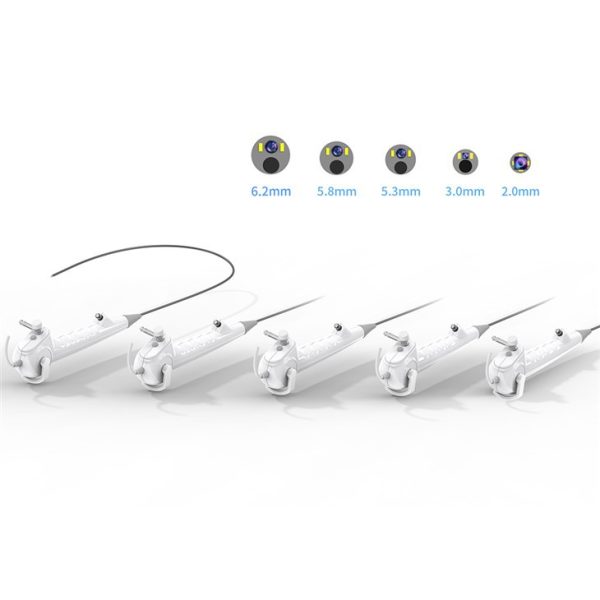
This is the main component of a disposable bronchoscope. It is usually made of flexible materials such as silicone or polyurethane, and it comes in different sizes to fit the needs of different patients.
LIGHT SOURCE
A built-in LED light source provides illumination to the bronchoscope tube, allowing physicians to visualize the airways and diagnose respiratory conditions.
CAMERA SYSTEM
Some disposable bronchoscope come with a camera system that captures real-time images of the bronchial tree. The images can be displayed on a monitor or recorded for further analysis.
CONTROL HANDLE
A control handle is used to maneuver the bronchoscope tube through the airways. It may include buttons for suctioning, irrigation, and biopsy forceps.
SUCTION PORT
A suction port allows physicians to remove secretions and debris from the airways during the procedure.
IRRIGATION PORT
An irrigation port enables physicians to flush the airways with saline to help visualize the bronchial tree and remove secretions.
BIOPSY FORCEPS
Some disposable bronchoscope come with built-in biopsy forceps, which allow physicians to obtain tissue samples from the airways for further analysis.
STERILE PACKAGING
Disposable bronchoscope are delivered in sterile packaging to ensure that they are hygienic and ready for immediate use in clinical settings.
Breathing Easier with Disposable Bronchoscope
"The results are worrisome, as patients undergoing bronchoscopy are commonly at high risk for infection due to transplant status, critical illness, or immune-suppression due to malignancy or chronic disease," states the study, "Effectiveness of Reprocessing for Flexible Bronchoscopes and Endobronchial Ultrasound Bronchoscopes."
Contamination was detected using microbial cultures and tests for protein, hemoglobin, and adenosine triphosphate. After manual cleaning, the researchers found all the bronchoscopes were still contaminated. The study says microbial growth, including that of mold, Stenotrophomonas maltophilia, and Escherichia coli/Shigella species, was found in 14 fully reprocessed bronchoscopes (58% of the total).
Visible irregularities were also seen in all the bronchoscopes, including retained fluid; brown, red, or oily residue; scratches; damaged insertion tubes and distal ends; and filamentous debris in channels.
The study concluded by saying that damaged and contaminated bronchoscopes were in use at all three sites, noting that inadequate reprocessing practices may have contributed to this. Two of the three study sites had substandard reprocessing standards.
However, even when reprocessing guidelines were followed, high-level disinfection was "not effective," the researchers said. They recommended a shift toward the use of sterilized bronchoscopes, as well as updating quality management programs and reprocessing guidelines.
These results seem to provide confirmation of various other studies that have been done with endoscopes, not specifically bronchoscopes. "This study was specifically done for bronchoscopes because that data was lacking," says Lars Marcher, CEO and President Ambu A/S, in an interview with MD+DI.
Contamination of reusable endoscopes has been known for some time now. "Endoscope Reprocessing Failures Continue to Expose Patients to Infection Risk" was number two on ECRI Institute's list of Top 10 health technology hazards for 2018. And it has been on the organization's top 10 list for the past eight years.
Shifting to single-use instruments will likely be cost effective as well. According to a 2017 study, "Early Assessment of the Likely Cost Effectiveness of Single-Use Flexible Video Bronchoscopes," the estimated cost of using reusable bronchoscopes is $424, with a 0.7% risk of infection. Single-use technology costs an average of $305, with 0% risk of infection.

How to Maintain Disposable Bronchoscope
Store the bronchoscope in a dry and cool place.
Avoid exposure to direct sunlight and harsh chemicals.
Handle the instrument carefully to prevent damage to the light source and other components.
Use the bronchoscope only once to prevent the spread of infections.
Dispose of the bronchoscope properly after use, according to the manufacturer's instructions.
Always inspect the bronchoscope before use to make sure that it is in good condition.
If any defect is noticed, do not use the bronchoscope and contact the manufacturer immediately.
Train your staff on the proper use and handling of the single-use bronchoscope.
Study Findsdisposable Bronchoscope Reduce Hospital Readmission Rates by Half
Reusable scopes must be reprocessed between patients to clean the devices of contaminants and sterilize or disinfect them to protect against microorganisms that can cause infections. The FDA has identified bronchoscopes as more likely than other scopes to transmit microbes and cause infection if improperly reprocessed.
Ambu launched its first single-use flexible endoscope in 2009 and has been a leading proponent of disposable devices for fighting cross-contamination.

How to Choose Disposable Bronchoscope
Purpose and application
Determine the specific purpose and application for which you will be using the bronchoscope. Consider whether you need it for diagnostic procedures, therapeutic interventions, intubation, or other specific applications. Different bronchoscopes may be designed with specific features and capabilities to meet different needs.
Size and compatibility
Ensure that the bronchoscope you choose is compatible with the patient population you will be treating. Consider the size and diameter of the bronchoscope, as well as any specific requirements for pediatric or adult patients. It's important to select a bronchoscope that will fit comfortably and safely in the patient's airways.
Visualization and image quality
Evaluate the quality of the visualization and image provided by the bronchoscope. Look for features such as high-definition imaging, good color reproduction, and clear visibility of the airway structures. The quality of the image can greatly impact the accuracy and effectiveness of the procedure.
Maneuverability and flexibility
Consider the flexibility and maneuverability of the bronchoscope. A flexible bronchoscope allows for easier navigation through the airways and better access to different areas. Look for a bronchoscope that offers smooth and precise control during insertion and manipulation.
Ergonomics and user-friendliness
Assess the ergonomics and user-friendliness of the bronchoscope. Look for features such as a comfortable grip, intuitive controls, and easy maneuverability. A user-friendly bronchoscope can enhance the efficiency and ease of the procedure.
Sterility and safety
Ensure that the single-use bronchoscope is properly sterilized and packaged. Check for certifications and compliance with regulatory standards to ensure the safety and sterility of the device. It's important to choose a bronchoscope that meets the necessary infection control requirements.
Cost and budget
Consider the cost of the single-use bronchoscope and how it fits within your budget. Compare prices from different manufacturers and suppliers, taking into account any additional costs such as accessories or disposables. Balance the cost with the quality and features of the bronchoscope to make an informed decision.
Manufacturer reputation and support
Research the reputation and track record of the manufacturer. Look for a reputable manufacturer with a history of producing high-quality medical devices. Consider the availability of technical support, training, and after-sales service provided by the manufacturer.
Our Factory
Zhejiang Geyi Medical Devices Co., Ltd. is a high-tech company integrating R & D, production, sales and service. It's headquartered in Jiande, Hangzhou City. The company has established a research and development and production base of 20000 m² in Jiande.


FAQ
Q: What are the 3 types of bronchoscopes?
A: Bronchoscopy Procedures Available at Mercy
Flexible Bronchoscopy. Flexible bronchoscopy is the most common type of bronchoscopy. …
Rigid Bronchoscopy. Rigid bronchoscopy uses a wider, straight tube that cannot bend. …
Endobronchial Ultrasound. Endobronchial ultrasound combines bronchoscopy and ultrasound imaging.
Flexible Bronchoscopy. Flexible bronchoscopy is the most common type of bronchoscopy. …
Rigid Bronchoscopy. Rigid bronchoscopy uses a wider, straight tube that cannot bend. …
Endobronchial Ultrasound. Endobronchial ultrasound combines bronchoscopy and ultrasound imaging.
Q: Are single-use bronchoscopes better than reusable?
A: Single-use flexible bronchoscopes(SFB) eliminate the risk of bronchoscopy-related infection compared with traditional reusable flexible bronchoscopes(RFB). At present, there is no comparative study between SFB and RFB in the aspects of biopsy and interventional therapy.
Q: How much does a flexible bronchoscope cost?
A: The included studies yielded a mean reusable flexible bronchoscope procedure cost of $266. The mean single-use flexible bronchoscope procedure cost was $289. No significant cost difference between single-use flexible bronchoscopes and reusable flexible bronchoscopes was found.
Q: What is the difference between a bronchoscopy and a bronchoscope?
A: Bronchoscopy is a procedure that lets doctors look at your lungs and air passages. It's usually performed by a doctor who specializes in lung disorders (a pulmonologist). During bronchoscopy, a thin tube (bronchoscope) is passed through your nose or mouth, down your throat and into your lungs.
Q: Can a pulmonologist do a bronchoscopy?
A: Bronchoscopy is a procedure that lets doctors look at your lungs and air passages. It's usually performed by a doctor who specializes in lung disorders (a pulmonologist). During bronchoscopy, a thin tube (bronchoscope) is passed through your nose or mouth, down your throat and into your lungs.
Q: Why is bronchoscopy not sterile?
A: Bronchoscopes are designed with small lumens, multiple ports with obtuse angles, and linings vulnerable to damage and subsequent biofilm formation, presenting obstacles to proper cleaning and disinfection or sterilization.
Q: Why use a rigid bronchoscope?
A: Rigid bronchoscopy is most commonly used to manage patients who have obstruction of either their trachea or a proximal bronchus, since the rigid bronchoscope's large lumen facilitates suctioning and the removal of debris, or for interventional procedures such as insertion of airway stents.
Q: How long does a flexible bronchoscopy take?
A: The length of the bronchoscopy varies depending on what needs to be done and why you need it. The doctor can give you an estimate, but usually it can last from 15 minutes to an hour. passed through your nose and back of your throat into the lungs, it may cause some discomfort.
Q: Does your chest hurt after a bronchoscopy?
A: Once at home, you may have a mild sore throat, hoarseness, cough, or muscle aches. This is normal. However, you should call for help immediately if you have increasing chest pain or shortness of breath, or if you cough up more than a few quarter-sized clots or teaspoons of blood.
Q: How do they clean out your lungs during a bronchoscopy?
A: Bronchoalveolar lavage (BAL) is a procedure that is sometimes done during a bronchoscopy. It is also called bronchoalveolar washing. BAL is used to collect a sample from the lungs for testing. During the procedure, a saline solution is put through the bronchoscope to wash the airways and capture a fluid sample.
Q: Is bronchoscopy very painful?
A: Your doctor will spray a numbing liquid drug in your mouth and throat. Sometimes, tiny brushes, needles, or forceps are passed through the scope. This lets your doctor take a tissue sample from your lungs. But don't worry, it won't hurt!
Q: Can you do a bronchoscopy without being intubated?
A: In patients with hypoxic respiratory failure, the use of non-invasive ventilation (NIV) during bronchoscopy has been shown to reduce the risk of intubation. On the other hand, bronchoscopy in mechanically ventilated patients is not contraindicated and has been widely used.
Q: Can you get sick after a bronchoscopy?
A: If you have general anesthesia for a rigid bronchoscopy, you will wake up in the recovery room. When you do, you'll feel tired, groggy, and perhaps sick to your stomach, and may have a dry mouth and sore throat. You may also feel cold and shivery until the effect of the anesthesia wears off.
Q: What sedation is given in flexible bronchoscopy?
A: The administration of propofol for conscious sedation in flexible bronchoscopy is usually performed by repeated intravenous boluses. In contrast, the continuous infusion of propofol is an established method of sedation in the intensive care unit (ICU), where its administration occurs over hours or days.
Q: What are the new techniques for bronchoscopy?
A: Recently, newer technologies-including robotic-assisted bronchoscopy (RAB), cone-beam CT (CBCT), and augmented fluoroscopy (AF)-have been introduced to aid in the navigation to peripheral pulmonary nodules.
Q: What is a bronchoscopy wash?
A: A mild salt solution is washed over the surface of the airways to collect cells, which are then looked at under a microscope. Bronchial washing is used to find infections. It may also help find cancer or changes in cells that may lead to cancer.
Q: Which is better bronchoscopy or CT scan?
A: CT was more efficient than bronchoscopy for identifying the cause of bleeding (77% vs 8%, respectively; p < 0.001), whereas the two methods were comparable for identifying the site of bleeding (70% vs 73%, respectively; p = not significant). CONCLUSION.
Q: Can you get pneumonia from a bronchoscopy?
A: Flexible bronchoscopy (FB) is an essential procedure employed for diagnosis and staging of lung cancer. Although FB is generally a safe procedure,4,5 the development of infectious complications such as pneumonia, lung abscess, and empyema following the procedure have been reported at a rate of 0.2–5.2%.
Q: What is the recovery time for a bronchoscopy?
A: Your Recovery
Afterward, you may feel tired for 1 or 2 days. Your mouth may feel very dry for several hours after the procedure. You may also have a sore throat and a hoarse voice for a few days. Sucking on throat lozenges or gargling with warm salt water may help soothe your sore throat.
Afterward, you may feel tired for 1 or 2 days. Your mouth may feel very dry for several hours after the procedure. You may also have a sore throat and a hoarse voice for a few days. Sucking on throat lozenges or gargling with warm salt water may help soothe your sore throat.
Q: Can bronchoscopy remove mucus plugs?
A: On bronchoscopy, a large mucus plug in the truncus intermedius was noted (Picture B). We initially failed to remove the mucus via suction due to its high viscosity; however, removal was ultimately successful using a cryoprobe (1.9 mm) with 1 freezing cycle lasting 6 seconds (Picture C).
Hot Tags: disposable bronchoscope, China disposable bronchoscope manufacturers, suppliers, factory, 4K Medical Endoscope Camera System, Disposable Ureteroscope, Choledochoscope, Gastroenterology, Single Use Digital Ureteroscope, Portable Endoscope System