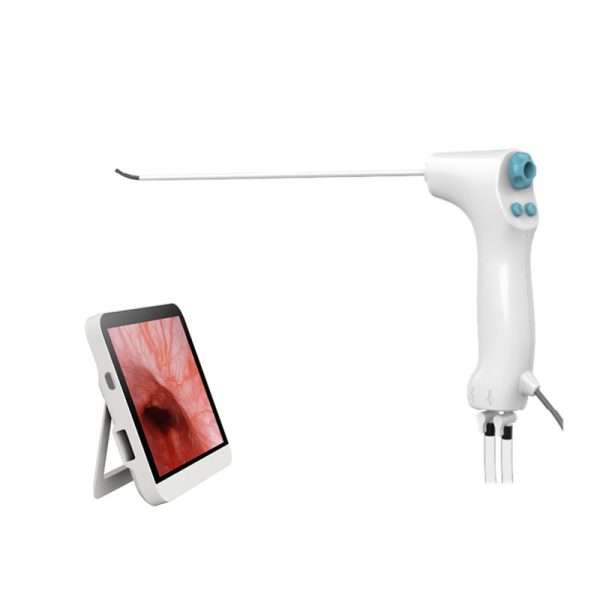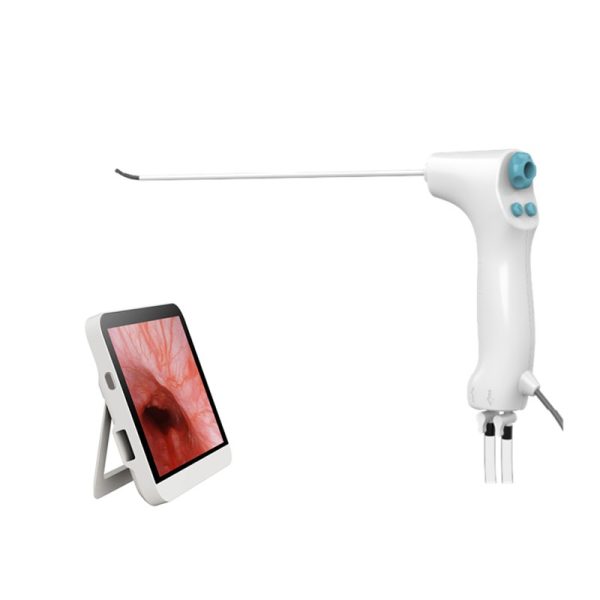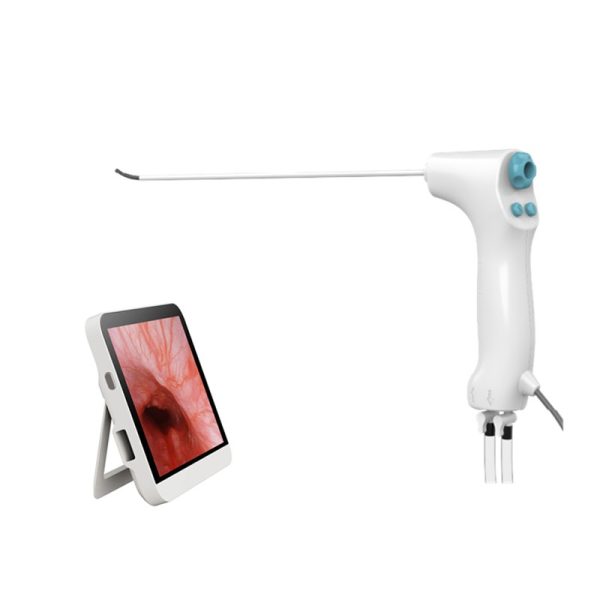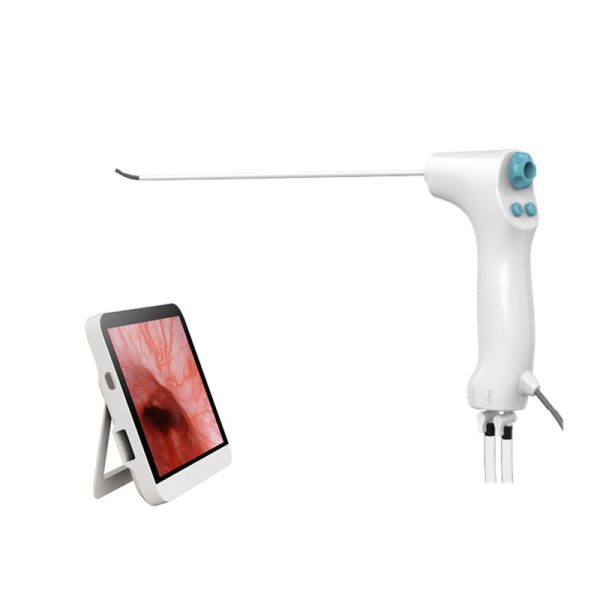
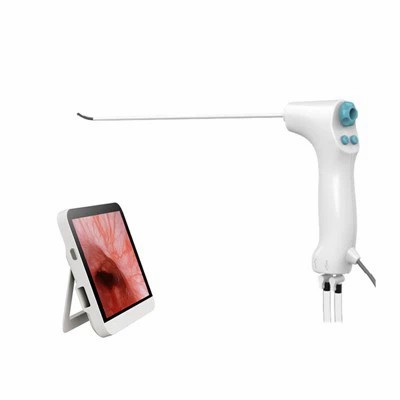
Flexible Hysteroscope
A hysteroscope is an endoscope that carries optical and light channels or fibers. It is introduced in a sheath that provides an inflow and outflow channel for insufflation of the uterine cavity. In addition, an operative channel may be present to introduce scissors, graspers or biopsy instruments. A hysteroscopic resectoscope is similar to a transurethral resectoscope and allows entry of an electric loop to shave off tissue, for instance to eliminate a fibroid. A contact hysteroscope is a hysteroscope that does not use distention media.
- ISO 13485
- FDA 510(k) clearance
- CE certification
- OEM / private label
Manufactured by Zhejiang Geyi Medical Devices Co., Ltd. under the Jumping Spider™ brand. Model-level certificates confirmed on request.
Product description
A hysteroscope is an endoscope that carries optical and light channels or fibers. It is introduced in a sheath that provides an inflow and outflow channel for insufflation of the uterine cavity. In addition, an operative channel may be present to introduce scissors, graspers or biopsy instruments. A hysteroscopic resectoscope is similar to a transurethral resectoscope and allows entry of an electric loop to shave off tissue, for instance to eliminate a fibroid. A contact hysteroscope is a hysteroscope that does not use distention media.
Your Leading Geyi Medical Devices Supplier
Zhejiang Geyi Medical Devices Co., Ltd. is a high-tech company integrating R & D, production, sales and service. It's headquartered in Jiande, Hangzhou City. The company has established a research and development and production base of 20000 m² in Jiande. It has a clean workshop of 5000 m² and a laboratory of 500 m². The company has a sound quality management system and equipment with a high degree of automation of production processes and testing methods, the company has successfully passed the "Medical Device Production Quality Control", "Management Standard" system assessment, and obtained ISO13485 medical device quality management system certification; Its product series of disposable trocars, digital endoscopes, electrocoagulation surgical instrument , surgical stapler series, endoscopic image camera systems, medical equipment have obtained domestic registration certificates and EU CE certificates.
Why Choose Us
Competitive price
We have a professional purchasing team and costing team,trying to reduce costs and profits,and provide you with a good price.
24h online service
You can contact us to inquire about pre-sales, sales, and after-sales services, and we will give you a very satisfactory.We are at your service online 24 hours a day.
Quality control
For each process,we have strict inspection standards,and we always insist that quality is life.
One-stop Solution
With rich experience and one-to-one service,we can help you choose products and answer technical questions.

Single use hysteroscope is a safe and minimally invasive procedure done to examine the uterus. It offers the convenience of using a disposable device that eliminates the risk of infections and guarantees better outcomes. The procedure is also quick and may take only a few minutes with no downtime post-procedure. With disposable hysteroscopy, patients can enjoy the many benefits of faster recovery, reduced pain, and minimal discomfort during the procedure.

Flexible hysteroscope is a safe and minimally invasive procedure done to examine the uterus. It offers the convenience of using a disposable device that eliminates the risk of infections and guarantees better outcomes. The procedure is also quick and may take only a few minutes with no downtime post-procedure. With disposable hysteroscopy, patients can enjoy the many benefits of faster recovery, reduced pain, and minimal discomfort during the procedure.

Disposable hysteroscope is a safe and minimally invasive procedure done to examine the uterus. It offers the convenience of using a disposable device that eliminates the risk of infections and guarantees better outcomes. The procedure is also quick and may take only a few minutes with no downtime post-procedure. With disposable hysteroscopy, patients can enjoy the many benefits of faster recovery, reduced pain, and minimal discomfort during the procedure.

Portable hysteroscope is a safe and minimally invasive procedure done to examine the uterus. It offers the convenience of using a disposable device that eliminates the risk of infections and guarantees better outcomes. The procedure is also quick and may take only a few minutes with no downtime post-procedure. With disposable hysteroscopy, patients can enjoy the many benefits of faster recovery, reduced pain, and minimal discomfort during the procedure.
Advantages of Flexible Hysteroscope
Minimally Invasive
Flexible hysteroscope is a minimally invasive procedure, meaning it involves small incisions or sometimes no incisions at all. This leads to reduced post-operative pain, shorter recovery times, and lower risk of infection compared to traditional open surgery.
Accurate Diagnosis
The hysteroscope allows for precise visualization of the uterine cavity. This accuracy is crucial for identifying various uterine conditions such as fibroids, polyps, adhesions, or abnormal uterine bleeding.
Effective Treatment
Flexible hysteroscope is not limited to diagnosis; it can also be used for treatment. Many uterine conditions can be addressed during the same procedure, reducing the need for additional surgeries.
Improved Reproductive Health
Flexible hysteroscope is often used to investigate and treat issues related to infertility. Identifying and addressing uterine abnormalities can enhance reproductive health and boost the chances of successful conception.
Minimal Downtime
The recovery time after flexible hysteroscope is minimal. Most women can resume their regular activities within a day or two, making it convenient for those with busy lives.
Reduced Pain
The minimal invasiveness of hysteroscopy results in less post-operative pain and discomfort, promoting a more comfortable recovery.
Customized Care
Flexible hysteroscope allows for a tailored approach to each patient's specific needs. Healthcare providers can adapt the procedure to address individual concerns effectively.
Versatility
Flexible hysteroscope can be used in combination with other procedures or treatments, increasing its versatility and applicability to a wide range of gynecological conditions.
Immediate Results
The live imaging provided by the hysteroscope allows the healthcare provider to assess the uterus in real-time. This immediate feedback can be valuable in making treatment decisions.

What is Flexible Hysteroscope
A hysteroscope is an endoscope that carries optical and light channels or fibers. It is introduced in a sheath that provides an inflow and outflow channel for insufflation of the uterine cavity. In addition, an operative channel may be present to introduce scissors, graspers or biopsy instruments. A hysteroscopic resectoscope is similar to a transurethral resectoscope and allows entry of an electric loop to shave off tissue, for instance to eliminate a fibroid. A contact hysteroscope is a hysteroscope that does not use distention media.
Choosing the Right Flexible Hysteroscope
When choosing the right flexible hysteroscope, there are several factors to consider to ensure the best possible outcomes for the patient.
Type of flexible hysteroscope: There are two main types of flexible hysteroscopes: diagnostic and operative. Diagnostic flexible hysteroscopes are used for examination and diagnosis of uterine conditions, while operative flexible hysteroscopes are used for surgical procedures. It is important to select the appropriate type of flexible hysteroscope for the intended use.
Diameter and length of the flexible hysteroscope: The diameter and length of the flexible hysteroscope depend on the patient's anatomy and the intended use. A smaller diameter flexible hysteroscope may be more comfortable for the patient, but it may not provide enough visibility for the physician. The length of the flexible hysteroscope should also be appropriate for the patient's anatomy to avoid injury.
Image quality: The image quality of the flexible hysteroscope is crucial for accurate diagnosis and treatment. The flexible hysteroscope should have high-resolution imaging capabilities and provide clear visualization of the uterine cavity. The image quality should also be compatible with the video system used in the operating room
Irrigation system: An effective irrigation system is necessary to maintain a clear view of the uterine cavity during the procedure. The flexible hysteroscope should have a reliable and efficient irrigation system that can easily flush out any debris or blood that may obstruct the view.
Compatibility with instruments: If the flexible hysteroscope is intended for operative use, it is essential to ensure that it is compatible with the necessary instruments. The flexible hysteroscope should be able to accommodate different instruments, such as graspers, scissors, and biopsy forceps.
Choosing the right flexible hysteroscope is critical to the success of a hysteroscopy procedure. It is essential to consider the factors mentioned above to select the appropriate flexible hysteroscope for the intended use and patient's anatomy. Working with a reputable medical supplier or equipment manufacturer can also help ensure that the flexible hysteroscope meets the necessary standards for quality and safety.
Why Choose Flexible Hysteroscope?
Now, let's discuss the key advantages of choosing flexible hysteroscope:
01/
Comprehensive Diagnosis
Flexible hysteroscope offers a thorough and comprehensive evaluation of the uterine cavity. It allows healthcare providers to visualize the interior of the uterus, inspecting for various abnormalities and issues that could impact a woman's health.
This includes the identification of polyps, fibroids, adhesions, and other structural problems. By providing a direct and clear view, flexible hysteroscope facilitates precise diagnosis, ensuring that any potential problems are detected with a high degree of accuracy.
02/
Same-Day Treatment
One of the remarkable features of flexible hysteroscope is its capacity to provide both diagnosis and treatment in a single session. In many cases, healthcare providers can immediately address any issues discovered during the diagnostic phase.
This means that if polyps, fibroids, or adhesions are detected, they can be removed during the same flexible hysteroscope procedure. This not only saves time but also avoids the need for a second surgery, reducing both inconvenience and healthcare costs.
03/
Minimally Invasive Nature
Flexible hysteroscope is celebrated for its minimally invasive approach. Unlike traditional open surgeries, flexible hysteroscope requires only small incisions or, in some cases, no incisions at all.
This approach minimizes trauma to the body, resulting in significantly less pain and discomfort for the patient. The recovery period is notably shorter, allowing women to return to their daily activities quickly.
04/
Enhanced Reproductive Health
For women who are looking to conceive or have a successful pregnancy, flexible hysteroscope offers a unique advantage. By addressing uterine issues such as polyps, fibroids, or adhesions, this procedure can substantially improve a woman's chances of a successful pregnancy.
A healthy uterine environment is crucial for the implantation and development of an embryo. flexible hysteroscope helps create this optimal setting, enhancing reproductive health.
05/
Precise and Safe Procedure
Flexible hysteroscope is recognized for its precision and safety. The procedure is performed with a high degree of accuracy, ensuring that the healthcare provider can diagnose and treat specific uterine conditions with great precision.
This precision reduces the likelihood of complications. Compared to other surgical options, flexible hysteroscope has a lower risk profile, making it a safe choice for women seeking to address uterine issues.
06/
Empowerment for Women
Opting for flexible hysteroscope empowers women to take control of their health and make informed decisions about their well-being.
By actively participating in their healthcare, women can discuss treatment options with their healthcare providers and play an active role in shaping their treatment plans. This sense of empowerment is invaluable and contributes to overall confidence and well-being.
Flexible Hysteroscope Market: Competitive Landscape
The competitive landscape of the flexible hysteroscope Market is a crucial focus of our analysis. We have conducted an exhaustive examination of key market players, both established and emerging, to provide insights into their strategies, strengths, and weaknesses. Our research aims to equip stakeholders with valuable intelligence for informed decision-making.
Furthermore, we highlight recent developments, partnerships, mergers, and acquisitions within the industry, shedding light on how these factors influence the competitive dynamics.
Flexible hysteroscope Market: Segmentation
To facilitate a comprehensive understanding of the flexible hysteroscope Market, we have meticulously segmented it based on various parameters. Our segmentation analysis dissects the market into distinct categories, such as product types, applications, geographical regions, and more. This approach allows us to identify niche opportunities and tailor recommendations to specific target audiences.
Each segment is analyzed individually, offering insights into market trends, growth prospects, and challenges. This granular approach ensures that our readers gain a nuanced understanding of the market's diverse facets.
Navigating the World of Flexible Hysteroscope: A Comprehensive Overview
Welcome to our latest blog post, where we'll be discussing the topic of flexible hysteroscopes. Hysteroscopy is a minimally invasive surgical procedure used to diagnose and treat various uterine conditions. It involves inserting a thin, lighted instrument called a flexible hysteroscope into the uterus through the cervix. flexible hysteroscope can be used for a wide range of purposes, from identifying the cause of abnormal uterine bleeding to removing fibroids or polyps.
In this post, we'll delve into the details of flexible hysteroscopes, discussing their uses, types, and benefits. We'll also explore some of the key factors to consider when choosing a flexible hysteroscope and provide some tips for ensuring optimal outcomes.
First, we'll discuss the various applications of hysteroscopy. flexible hysteroscope are commonly used to investigate the cause of abnormal uterine bleeding, as they allow for a thorough examination of the uterine cavity. They can also be used to remove uterine polyps and fibroids, as well as to perform endometrial ablation and tubal sterilization.
Next, we'll explore the different types of flexible hysteroscopes available. There are two main types: rigid and flexible. Rigid flexible hysteroscopes are straight and inflexible, while flexible flexible hysteroscopes can be bent and maneuvered to access hard-to-reach areas. Within these two categories, there are also various sizes and shapes available, depending on the specific needs of the patient and the procedure.
We'll also delve into some of the benefits of hysteroscopy. One of the primary benefits is that it is a minimally invasive procedure, meaning that it requires only a small incision or opening, resulting in less pain and scarring compared to traditional surgery. Additionally, hysteroscopy allows for a more accurate diagnosis of uterine conditions and can often be performed on an outpatient basis, meaning that the patient can return home the same day.
Finally, we'll provide some key factors to consider when choosing a flexible hysteroscope. Some important factors include the type of procedure being performed, the size and shape of the patient's uterus, and the skill level of the surgeon. We'll also discuss some tips for ensuring optimal outcomes, such as properly preparing the patient for the procedure and ensuring that the flexible hysteroscope is properly sterilized and maintained.
In conclusion, flexible hysteroscopes are a valuable tool for diagnosing and treating a variety of uterine conditions. Whether you're a health professional looking to learn more about this procedure or a patient considering hysteroscopy, we hope that this post has provided some useful insights and information. So sit back, relax, and let's dive into the world of flexible hysteroscopes!
Our Factory
Zhejiang Geyi Medical Devices Co., Ltd. is a high-tech company integrating R & D, production, sales and service. It's headquartered in Jiande, Hangzhou City. The company has established a research and development and production base of 20000 m² in Jiande.


FAQ
Q: What is the difference between flexible and rigid hysteroscopes?
A: There are two different types of hysterocopes available: Flexible and rigid. Flexible scopes have the ability to observe the whole intrauterine cavity, but it is difficult to perform an operation on endometrial lesions. Rigid hysteroscopes provide superior optical qualities due to higher pixel count.
Q: What are the different types of hysteroscopes?
A: The two main types of hysteroscopes are flexible and rigid. Hysteroscopes are available at viewing angles ranging from 0 to 70 degrees. They all easily connect to fluid channels, a light source, and a video monitoring system.
Q: How painful is a hysteroscopy without anesthesia?
A: Having a hysteroscopy can be uncomfortable and may feel like period pain. Taking ibuprofen or paracetamol 1 hour before the procedure can help. However, some people find having a hysteroscopy very painful.
Q: Why was my hysteroscopy so painful?
A: Conclusion: In addition to nulliparity and postmenopausal status, unfavorable features of the cervical canal, such as the excessive flexion position of the cervix and uterine retroversion are significant causes of pain during outpatient hysteroscopy.
Q: Is flexible hysteroscopy painful?
A: Generally, patients tolerate the procedure well without anesthesia, and the rate for adequate access and visualization is high.
Q: What is the essential difference between rigid and flexible?
A: Flexible pavement are less durable and require more maintenance. Rigid payment are more durable and required less maintenance. Construction cost Flexible pavement have lower initial construction cost. Rigid pavement have higher initial construction cost.
Q: What is the difference between 0 and 30 degree hysteroscope?
A: While a standard 0-degree scope is useful for obtaining a panoramic view of the visual field, visualization is limited to what lies directly in front of the lens. A 30-degree angled scope, on the other hand, changes where the center of the operative field is located.
Q: Why does it hurt to pee after a hysteroscopy?
A: It is really important to seek medical advice if you feel unwell after your surgery. You should look out for the following: Burning or stinging when you pass urine. This may be a urinary infection and can be treated with a course of oral antibiotics.
Q: What is the most common complication of hysteroscopy?
A: Uterine perforation is the commonest complication of hysteroscopic surgery. Uterus can be perforated during dilation or with hysteroscope.
Q: Are you put to sleep for a hysteroscopy?
A: It depends. Anesthesia for hysteroscopy may be local, regional or general. General anesthesia will put you to sleep. Local anesthesia: A small part of your body will be numb for a short time.
Q: What is the smallest hysteroscope?
A: A regular hysteroscope is of 4mm diameter. The office hysteroscope is of a smaller diameter of 2.9 mm. Since it is of a smaller diameter, the procedure can be performed without anaesthesia as there is no need to dilate the cervix.
Q: Which anesthesia is better for hysteroscopy?
A: Surgical Hysteroscopy. These procedures are generally implemented with the patient under either regional or general anesthesia, often as ambulatory or office-based procedures.
Q: Does your stomach swell after a hysteroscopy?
A: It is not uncommon to notice vaginal spotting postoperatively, and some women may experience menstrual irregularity including a missed period over the next 6 weeks. For the next 1-2 days, you may also experience abdominal swelling, a sore throat, and occasional nausea.
Q: What is the prep for a hysteroscopy?
A: You may be asked not to douche, use tampons, or use vaginal medicines for 24 hours before the hysteroscopy. Ask your doctor if you will need someone to take you home. Anesthesia and pain medicine can make it unsafe for you to drive or get home on your own.
Q: Why do I feel so tired after hysteroscopy?
A: Most modern anaesthetics are short-lasting. You should not have any side effects for more than a day after your operation. During the first 48 hours you may feel more sleepy than usual and your judgement may be impaired.
Q: What is the next step after a hysteroscopy?
A: When stable, you will be discharged to your home. Hysteroscopy is most often done on an outpatient basis. Otherwise, you won't need any special care after a hysteroscopy. You may have cramping and vaginal bleeding for a day or two after the procedure.
Q: Does insurance cover hysteroscopy?
A: Does Insurance Cover Hysteroscopy? Many insurance plans will cover hysteroscopy, especially if it's done to diagnose uterine abnormalities or to identify the cause of other symptoms like heavy bleeding, pain during your period, or miscarriage risks. However, a hysteroscopy may require authorization to be covered.
Q: How can I make hysteroscopy less painful?
A: Tramadol administration before hysteroscopy procedure is safe and efficient in reducing pain during and after diagnostic outpatient hysteroscopy (Level A).
Q: What injection is given before hysteroscopy?
A: Intravaginal misoprostol administration of 400 micrograms has been shown to decrease pain during and after office hysteroscopy when administered at least 4 hours before the procedure, likely because of the decreased need for dilation.
Q: Why am I so gassy after hysteroscopy?
A: You may have gas in the digestive tract and pains from the gas given during the procedure. This can last for about 24 hours. You may also feel pain in your upper belly and shoulder. Take a pain reliever for soreness as advised by your healthcare provider.
Hot Tags: flexible hysteroscope, China flexible hysteroscope manufacturers, suppliers, factory, ENT, Portable Bronchoscope, Endoscope Image Processor, Gastroenterology, Urology, Flexible Choledochoscope