What should I expect after a hysteroscopy?
Hey there! If you’re here, chances are you’ve either just had a hysteroscopy or you’re thinking about it.…
Read article →

As a supplier of disposable cystoscopes, I’ve often been asked whether our product can be effectively used for patients with kidney stones. This question is not only relevant to medical professionals but also to patients seeking the best possible treatment options. In this blog, I’ll delve into the topic, exploring the feasibility, advantages, and limitations of using a disposable cystoscope in the management of kidney stones.
Kidney stones, also known as renal calculi, are hard deposits made of minerals and salts that form inside your kidneys. These stones can cause severe pain, block the flow of urine, and lead to urinary tract infections if left untreated. One of the diagnostic and treatment methods for kidney stones is cystoscopy, a procedure that allows doctors to examine the inside of the bladder and urethra using a thin, flexible tube with a light and camera called a cystoscope.
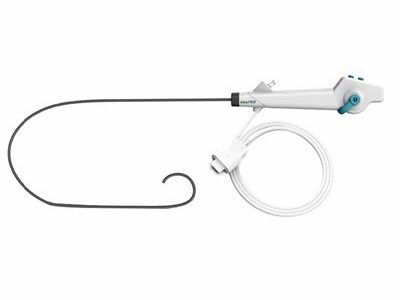
Traditional cystoscopes are reusable instruments that require thorough cleaning and sterilization between uses. However, disposable cystoscopes have emerged as a viable alternative in recent years. These single – use devices offer several benefits, which we’ll discuss in more detail.
When it comes to kidney stone patients, a disposable cystoscope can be a valuable tool. During the diagnostic phase, it can help doctors visualize the lower urinary tract to determine if there are any associated complications, such as bladder stones or urethral strictures. For example, in cases where a kidney stone has passed into the ureter and may be causing blockage at the bladder opening, a cystoscope can provide a clear view of the area.
In terms of treatment, disposable cystoscopes can be used in conjunction with other minimally invasive techniques. For instance, if a small kidney stone has migrated into the bladder, a doctor can use the cystoscope to guide the insertion of a small basket or forceps to retrieve the stone. This can be a less invasive alternative to more complex surgical procedures, reducing the patient’s recovery time and potential risks.
One of the primary advantages of using a disposable cystoscope for kidney stone patients is infection control. Reusable cystoscopes, despite rigorous cleaning protocols, can still pose a risk of cross – contamination between patients. Disposable cystoscopes eliminate this risk as they are used only once and then discarded. This is especially important for patients with kidney stones, who may already have a compromised immune system due to the presence of the stones and potential associated infections.
Another benefit is cost – effectiveness. While the upfront cost of a disposable cystoscope may seem higher than a reusable one, when you factor in the cost of cleaning, sterilization, and maintenance of reusable instruments, disposable cystoscopes can actually be more economical in the long run. Additionally, they reduce the need for specialized equipment and staff training for reprocessing, which can save time and resources in a busy medical facility.
Disposable cystoscopes are also more convenient. They are pre – sterilized and ready to use, eliminating the waiting time associated with reprocessing reusable instruments. This can be crucial in emergency situations where immediate diagnosis and treatment of kidney stone patients are required.
Despite their many advantages, disposable cystoscopes do have some limitations. One of the main concerns is their durability. Since they are designed for single – use, they may not be as robust as reusable cystoscopes. In some complex cases where multiple manipulations are required during the procedure, there is a risk of the disposable cystoscope malfunctioning or breaking.


Another limitation is the range of available accessories. Reusable cystoscopes often come with a wide variety of interchangeable accessories, such as different types of biopsy forceps and lasers. Disposable cystoscopes may have a more limited selection of accessories, which could potentially restrict the treatment options available for kidney stone patients.
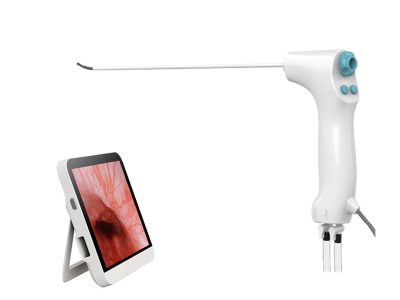
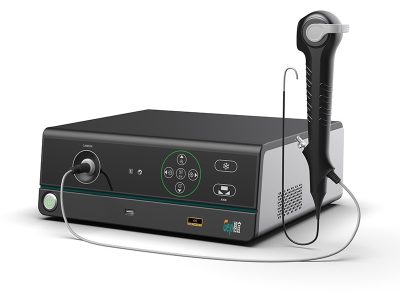
It’s also useful to compare disposable cystoscopes with other types of cystoscopes, such as Single Use Cystoscope and Portable Cystoscope. Single – use cystoscopes are similar to disposable cystoscopes in that they are used only once, but they may have different features and specifications. Portable cystoscopes, on the other hand, are designed for easy transport and use in different settings, such as in the office or in the field.
For kidney stone patients, a disposable cystoscope may offer the best balance between infection control, cost – effectiveness, and convenience. However, in some cases, a single – use or portable cystoscope may be more appropriate depending on the specific needs of the patient and the resources available in the medical facility.
In conclusion, a disposable cystoscope can be a valuable tool for patients with kidney stones. It offers several advantages in terms of infection control, cost – effectiveness, and convenience, although it also has some limitations. If you are a medical professional looking for a reliable and effective solution for diagnosing and treating kidney stone patients, I encourage you to consider our Disposable Cystoscope. Our disposable cystoscopes are designed to meet the highest standards of quality and performance, providing you with a safe and efficient option for your patients.
If you’re interested in learning more about our products or would like to discuss a potential purchase, please don’t hesitate to reach out. We’re here to provide you with all the information you need and to assist you in making the best decision for your medical practice.
 Blog
Blog
 Blog
Blog
 Blog
Blog