How does an Endoscope System ensure image quality?
As a trusted supplier of endoscope systems, I understand the critical role that image quality plays in medical…
Read article →

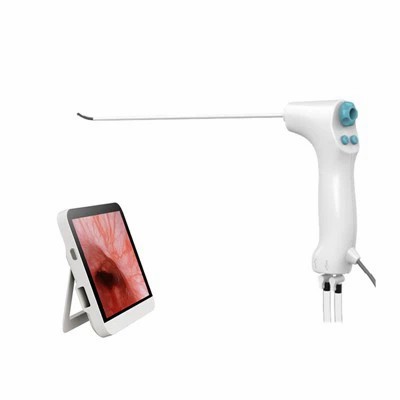
Can a hysteroscopy be used to remove intrauterine foreign bodies?
Intrauterine foreign bodies can pose significant health risks and discomfort to women. These foreign bodies can range from retained intrauterine devices (IUDs), fragments of surgical materials, to other accidental objects that have found their way into the uterine cavity. In recent years, hysteroscopy has emerged as a valuable tool in the diagnosis and management of such conditions. As a leading hysteroscope supplier, I am well – versed in the capabilities and applications of hysteroscopy in dealing with intrauterine foreign bodies.
Hysteroscopy is a minimally invasive procedure that allows direct visualization of the uterine cavity. It involves inserting a hysteroscope, a thin, lighted tube, through the vagina and cervix into the uterus. The hysteroscope is equipped with a camera that transmits real – time images of the uterine lining and any structures within the cavity to a monitor. This provides a clear view of the location and nature of the intrauterine foreign body.
There are different types of hysteroscopes available in the market. Our company offers a range of high – quality hysteroscopes, including the Flexible Hysteroscope, Single Use Hysteroscope, and Disposable Hysteroscope. The flexible hysteroscope is particularly useful as it can be easily maneuvered within the uterine cavity, adapting to its shape and curves. This flexibility allows for better visualization of hard – to – reach areas where foreign bodies may be lodged.
The first step in using hysteroscopy for foreign body removal is a thorough pre – operative assessment. The patient’s medical history, including previous surgeries, contraceptive use, and any symptoms related to the foreign body, is carefully reviewed. A pelvic examination is also conducted to assess the size and position of the uterus.
Once the patient is prepared, the hysteroscope is inserted into the uterine cavity under local or general anesthesia, depending on the complexity of the case and the patient’s preference. The surgeon carefully examines the uterine cavity, identifying the foreign body and its exact location. Specialized instruments can be passed through the working channel of the hysteroscope to grasp and remove the foreign body.
For example, if a retained IUD is the foreign body, forceps can be used to gently grasp the IUD and pull it out. In cases where the foreign body is fragmented or embedded in the uterine wall, more delicate techniques may be required. The high – resolution imaging provided by our hysteroscopes allows the surgeon to perform these procedures with precision, minimizing the risk of damage to the uterine tissue.
One of the main advantages of hysteroscopy is its minimally invasive nature. Compared to traditional open surgery, hysteroscopy results in less pain, shorter hospital stays, and faster recovery times for patients. There is also a lower risk of complications such as infection and bleeding.
The direct visualization provided by hysteroscopy is another significant advantage. It allows the surgeon to accurately identify the foreign body and its relationship to the surrounding uterine structures. This reduces the likelihood of leaving behind any fragments of the foreign body, which could lead to recurrent problems.
While hysteroscopy is a highly effective method for removing intrauterine foreign bodies, it is not without its challenges. In some cases, the foreign body may be deeply embedded in the uterine wall, making it difficult to remove without causing significant damage to the tissue. In such situations, additional procedures or a more invasive approach may be necessary.
Technical difficulties can also arise, especially in cases where the uterine cavity is distorted or the foreign body is located in a hard – to – reach area. However, the advanced features of our hysteroscopes, such as the high – definition imaging and flexible design, can help overcome many of these challenges.
Numerous studies have demonstrated the effectiveness of hysteroscopy in removing intrauterine foreign bodies. A study published in the Journal of Minimally Invasive Gynecology found that hysteroscopy had a high success rate in removing retained IUDs, with minimal complications. Another study in the International Journal of Gynecology and Obstetrics reported similar results for the removal of other types of intrauterine foreign bodies.
In conclusion, hysteroscopy is a valuable and effective method for removing intrauterine foreign bodies. Its minimally invasive nature, combined with the ability to provide direct visualization of the uterine cavity, makes it a preferred choice for both patients and surgeons. As a hysteroscope supplier, we are committed to providing high – quality products that meet the needs of medical professionals in performing these procedures safely and effectively.


If you are interested in learning more about our hysteroscopes or would like to discuss potential procurement opportunities, we encourage you to reach out to us. Our team of experts is ready to assist you in finding the right hysteroscope for your clinical practice.
 Blog
Blog
 Blog
Blog