How does a Choledochoscope help in the management of post – operative bile duct complications?
Hey there! As a supplier of choledochoscopes, I’ve seen firsthand how these nifty devices play a crucial role…
Read article →

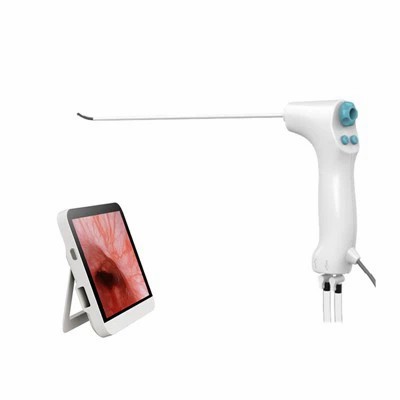
Can a hysteroscopy be used to treat Asherman’s syndrome?
Hey there! As a hysteroscope supplier, I often get asked about the use of hysteroscopes in treating various gynecological conditions. One question that comes up a lot is whether a hysteroscopy can be used to treat Asherman’s syndrome. In this blog post, I’m going to dive into this topic and share what I know.
First off, let’s talk about what Asherman’s syndrome is. It’s a condition where scar tissue forms inside the uterus, usually as a result of uterine surgery, such as a dilation and curettage (D&C), or due to severe uterine infections. This scar tissue can cause the walls of the uterus to stick together, leading to a range of problems like menstrual irregularities, infertility, and recurrent miscarriages.
So, can a hysteroscopy help? The short answer is yes! Hysteroscopy is a minimally invasive procedure that allows doctors to directly visualize the inside of the uterus using a thin, lighted tube called a hysteroscope. This tool is super useful when it comes to diagnosing and treating Asherman’s syndrome.
When it comes to diagnosis, a hysteroscopy provides a clear view of the uterine cavity. Doctors can see exactly where the scar tissue is located, how extensive it is, and how it’s affecting the normal structure of the uterus. This detailed information is crucial for planning the appropriate treatment.


Now, let’s get into the treatment part. During a hysteroscopic treatment for Asherman’s syndrome, the doctor can use special instruments passed through the hysteroscope to carefully remove the scar tissue. This is known as adhesiolysis. The goal is to restore the normal shape and function of the uterus. It’s a delicate procedure, but with the right equipment and an experienced doctor, it can be very effective.
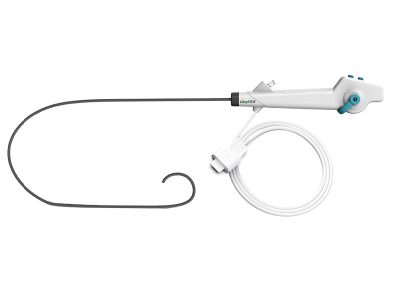
There are different types of hysteroscopes that can be used for this procedure. One option is the Flexible Hysteroscope. The flexibility of this hysteroscope allows it to navigate the curves and contours of the uterine cavity more easily, which can be especially helpful when dealing with complex cases of Asherman’s syndrome. It provides a better view of hard-to-reach areas, making it possible to remove scar tissue more precisely.
Another type is the Single Use Hysteroscope. These hysteroscopes are designed for one-time use, which eliminates the need for reprocessing and reduces the risk of cross-contamination. This can be a great option in terms of infection control, especially in a clinical setting where multiple patients are being treated.
The success rate of hysteroscopic treatment for Asherman’s syndrome depends on several factors. The severity of the scarring is a big one. Mild cases of Asherman’s syndrome usually have a higher success rate, with many women experiencing improved menstrual cycles and increased chances of pregnancy after the procedure. However, in more severe cases, where there is extensive scarring, the treatment may be more challenging, and multiple procedures might be required.
After the hysteroscopic treatment, patients usually need to take some steps to prevent the scar tissue from coming back. This may involve using hormonal therapy to promote the growth of the uterine lining or placing a uterine stent to keep the uterine walls separated during the healing process.
It’s also important to note that while hysteroscopy is a great treatment option, it’s not the only one. In some cases, a combination of treatments may be recommended, depending on the individual patient’s situation. For example, in addition to hysteroscopic adhesiolysis, a patient may also receive fertility treatments if they are trying to conceive.
So, in conclusion, hysteroscopy is a valuable tool in the diagnosis and treatment of Asherman’s syndrome. It offers a minimally invasive approach that can significantly improve the quality of life for women suffering from this condition. Whether you’re a doctor looking for the right hysteroscope for your practice or a patient interested in learning more about your treatment options, it’s important to understand the benefits and limitations of hysteroscopy.
If you’re in the market for a high-quality hysteroscope for the treatment of Asherman’s syndrome or other gynecological procedures, we’ve got you covered. Our range of Flexible Hysteroscopes and Single Use Hysteroscopes are designed to meet the needs of medical professionals. We’re committed to providing reliable and effective equipment that can make a difference in patient care.
If you’re interested in learning more about our products or discussing your specific requirements, don’t hesitate to reach out. We’re here to help you find the best solution for your practice. Contact us today to start the conversation and explore how our hysteroscopes can support your work in treating Asherman’s syndrome and other gynecological conditions.
References
 Blog
Blog
 Blog
Blog