Can an endoscope camera system be used in a sterile environment?
In the medical field, the use of endoscope camera systems has become increasingly widespread, offering invaluable insights into…
Read article →

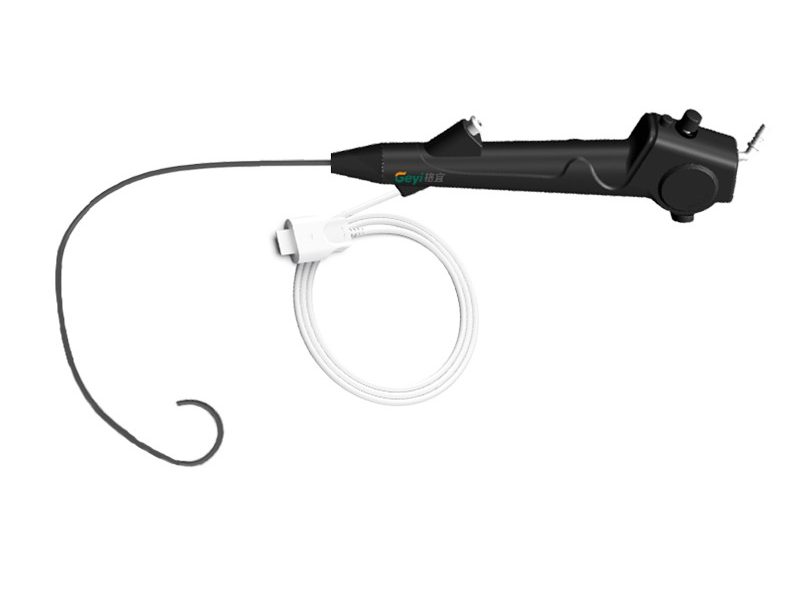
When it comes to medical devices, the balance between battery charging time and working time is a crucial factor, especially for portable devices like the Portable Cystoscope. As a supplier of high – quality Portable Cystoscopes, I’ve had numerous discussions with medical professionals and end – users about this very topic.
A portable cystoscope is a remarkable piece of medical equipment used for the visual examination of the urinary bladder and the interior of the urethra. Its portability is a game – changer, allowing for examinations in various settings, not just in well – equipped hospitals. This mobility is largely thanks to its battery – powered design, which liberates it from the constraints of a fixed power source.
The type of battery used in a portable cystoscope can vary, but in recent years, lithium – ion batteries have become the norm. These batteries offer several advantages in a medical device context. They have a high energy density, meaning they can store a large amount of energy in a relatively small and lightweight package. This is essential for maintaining the portability aspect of the cystoscope. Lithium – ion batteries also have a low self – discharge rate, which means they can hold their charge for longer periods when not in use.
The charging time of a portable cystoscope battery depends on multiple factors. Firstly, the capacity of the battery plays a significant role. A larger – capacity battery will naturally take longer to charge compared to a smaller one, assuming the same charging current. For example, if a cystoscope has a 3000mAh battery and is charged with a 1A charger, according to the formula (t = \frac{Q}{I}) (where (t) is time, (Q) is charge capacity, and (I) is current), it would theoretically take about 3 hours to fully charge the battery. However, in real – world scenarios, charging efficiency is not 100%, so it may take a bit longer, perhaps around 3.5 hours.
Another factor influencing charging time is the charging technology employed. Some modern portable cystoscopes come with fast – charging capabilities. Fast – charging technologies can significantly reduce the charging time by increasing the charging current. For instance, if a cystoscope supports a 2A charging current, the same 3000mAh battery could be charged in approximately 1.5 hours, again with some additional time due to efficiency losses.
However, fast – charging also has its drawbacks. It can generate more heat during the charging process, which may potentially affect the long – term health of the battery. Over time, excessive heat can cause the battery to degrade faster, reducing its overall lifespan and capacity.
The working time of a portable cystoscope is equally important. It determines how many examinations can be carried out on a single charge. The power consumption of a cystoscope depends on several factors, including the brightness of the light source, the operation of any additional features such as image capture or video recording, and the efficiency of the internal electronics.
The light source is one of the major power consumers in a cystoscope. High – brightness LEDs are commonly used to provide clear visualization inside the body. If a cystoscope is set to a very high brightness level for extended periods, it will drain the battery more quickly. On average, a portable cystoscope with a fully – charged battery might offer a working time of 1.5 to 3 hours under normal operating conditions.
For instance, if a cystoscope is used for a series of simple bladder examinations without the need for constant high – brightness illumination or frequent use of imaging functions, it could potentially operate for closer to 3 hours. However, if it is being used for a complex procedure that requires continuous high – quality imaging and bright lighting, the working time might be closer to 1.5 hours.
When comparing the battery charging time and working time of a portable cystoscope, it’s clear that achieving a good balance is essential. From a user perspective, it would be ideal if the charging time was significantly shorter than the working time. This would minimize downtime between procedures and allow for more continuous use of the device.
In many cases, fast – charging technologies have brought the charging time down to a level where it is relatively reasonable compared to the working time. For example, a cystoscope with a 2 – hour working time that can be charged in 1.5 hours provides a decent balance. This means that if a device is fully depleted after a busy day of use, it can be recharged overnight and be ready for the next day’s examinations.


However, this balance can be disrupted if the battery degrades over time. As the battery ages, its capacity decreases, reducing the working time. At the same time, the charging time may not change proportionally, or in some cases, it may even increase due to internal resistance changes in the battery. This is why proper battery management, such as avoiding over – charging and over – discharging, is crucial for maintaining the optimal relationship between charging time and working time.
For medical facilities, the charging time and working time of portable cystoscopes have significant implications for their operations. In a busy urology clinic, where multiple patients need to be examined throughout the day, a device with a long working time and short charging time is highly desirable. It allows for a smooth workflow without the need for frequent interruptions to recharge the device.
On the other hand, in more remote or resource – limited settings, the balance between charging time and working time is even more critical. There may not be a reliable power supply available at all times, so a cystoscope with a long working time can provide more flexibility. Additionally, if the charging time is long, it may be difficult to keep the device operational in case of unexpected power outages.
In the market, there are also Single Use Cystoscope and Disposable Flexible Cystoscope. Single – use cystoscopes eliminate the need for battery charging and maintenance as they are designed for one – time use. They are a great option for reducing the risk of cross – contamination between patients. Disposable flexible cystoscopes offer similar benefits and are also very convenient, especially in situations where cleaning and sterilization of reusable cystoscopes may be challenging.
If you are interested in learning more about our Portable Cystoscopes and how they can meet your medical needs, or if you are considering a procurement, feel free to reach out. Our team of experts is ready to discuss your requirements in detail and provide you with the best solutions.
 Blog
Blog