What new applications are being explored for Choledochoscopes?
Hey there! As a choledochoscope supplier, I’m super excited to share with you the latest buzz about the…
Read article →

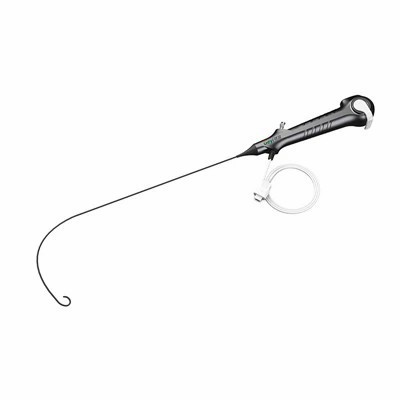
Digital flexible ureteroscope changes the way you think about flexible ureteroscopy. It delivers detailed high-resolution digital images for high-quality visualization and navigation – to help you remove stones quickly, safely and affordably.
Zhejiang Geyi Medical Devices Co., Ltd. is a high-tech company integrating R & D, production, sales and service. It's headquartered in Jiande, Hangzhou City. The company has established a research and development and production base of 20000 m² in Jiande. It has a clean workshop of 5000 m² and a laboratory of 500 m². The company has a sound quality management system and equipment with a high degree of automation of production processes and testing methods, the company has successfully passed the "Medical Device Production Quality Control", "Management Standard" system assessment, and obtained ISO13485 medical device quality management system certification; Its product series of disposable trocars, digital endoscopes, electrocoagulation surgical instrument , surgical stapler series, endoscopic image camera systems, medical equipment have obtained domestic registration certificates and EU CE certificates.
Competitive price
We have a professional purchasing team and costing team,trying to reduce costs and profits,and provide you with a good price.
24h online service
You can contact us to inquire about pre-sales, sales, and after-sales services, and we will give you a very satisfactory.We are at your service online 24 hours a day.
Quality control
For each process,we have strict inspection standards,and we always insist that quality is life.
One-stop Solution
With rich experience and one-to-one service,we can help you choose products and answer technical questions.

Single Use Digital Flexible Ureteroscope
Single use digital flexible ureteroscope are state-of-the-art medical tools that are used to diagnose and treat urinary tract issues.

Single Use Flexible Cystoscope
Single use flexible cystoscope offers a safer and more hygienic option as it eliminates the risk of cross-contamination and infection transmission. The disposable nature of the cystoscope makes it easy to dispose of after a single procedure, thereby reducing the time and effort required for cleaning and sterilization. Overall, it provides a more efficient and cost-effective solution for urological examinations and procedures.

Single Use Digital Ureteroscope
Digital ureteroscope are state-of-the-art medical tools that are used to diagnose and treat urinary tract issues

Single use ureteroscope are state-of-the-art medical tools that are used to diagnose and treat urinary tract issues.

Single Use Flexible Ureteroscope
Single use flexible ureteroscope are state-of-the-art medical tools that are used to diagnose and treat urinary tract issues.

Disposable Flexible Ureteroscope
Disposable flexible ureteroscope are state-of-the-art medical tools that are used to diagnose and treat urinary tract issues.

Disposable ureteroscope are state-of-the-art medical tools that are used to diagnose and treat urinary tract issues.

Digital flexible ureteroscope are state-of-the-art medical tools that are used to diagnose and treat urinary tract issues.

Disposable cystoscope offers a safer and more hygienic option as it eliminates the risk of cross-contamination and infection transmission. The disposable nature of the cystoscope makes it easy to dispose of after a single procedure, thereby reducing the time and effort required for cleaning and sterilization. Overall, it provides a more efficient and cost-effective solution for urological examinations and procedures.

Single Use Cystoscope
Single use cystoscope offers a safer and more hygienic option as it eliminates the risk of cross-contamination and infection transmission. The disposable nature of the cystoscope makes it easy to dispose of after a single procedure, thereby reducing the time and effort required for cleaning and sterilization. Overall, it provides a more efficient and cost-effective solution for urological examinations and procedures.

Disposable Flexible Cystoscope
Disposable flexible cystoscope offers a safer and more hygienic option as it eliminates the risk of cross-contamination and infection transmission. The disposable nature of the cystoscope makes it easy to dispose of after a single procedure, thereby reducing the time and effort required for cleaning and sterilization. Overall, it provides a more efficient and cost-effective solution for urological examinations and procedures.

Flexible cystoscope offers a safer and more hygienic option as it eliminates the risk of cross-contamination and infection transmission. The disposable nature of the cystoscope makes it easy to dispose of after a single procedure, thereby reducing the time and effort required for cleaning and sterilization. Overall, it provides a more efficient and cost-effective solution for urological examinations and procedures.
The main benefit of digital flexible ureteroscope is that it's an effective way to remove or break up kidney stones. It is a lot less painful than trying to pass a kidney stone without treatment.
Digital flexible ureteroscope may have a higher success rate at removing very large stones in comparison to other treatments, such as Extracorporeal Shock Wave Lithotripsy (ESWL). Surgery is minimally invasive and an outpatient procedure, which means it does not require a hospital stay.
The risks are minimal. Digital flexible ureteroscope carries a slight chance of bleeding or injury to the ureter. This makes it ideal for those who are pregnant, morbidly obese, or have a blood clotting disorder. There is also a small chance of developing a urinary tract infection (UTI).

Digital flexible ureteroscope changes the way you think about flexible ureteroscopy. It delivers detailed high-resolution digital images for high-quality visualization and navigation – to help you remove stones quickly, safely and affordably.
To perform this procedure, a digital flexible ureteroscope is used, which is a thin, tube-shaped instrument with a light and a lens for observation. It may also have an additional tool to extract tissue for later analysis to detect signs of disease.
The instrument is also used to introduce a holmium laser fibre to fragment stones or remove a tumour.
There are two types of instruments used for this treatment:
Rigid digital flexible ureteroscope, used for procedures that involve reaching the lower ureter, particularly below the iliac vessels, closer to the bladder; they are preferred by specialists for their easy insertion, direct vision, excellent image transmission and control of the working instrument and its accessories.
Flexible digital flexible ureteroscopes are used for procedures that involve reaching the upper ureter and the intrarenal collecting system, which is closer to the kidney, as they allow better passage through the ureteral angles, and allow access to the entire collecting system in 90% of patients.
Although it is not a very invasive treatment, specialists describe it as a more invasive procedure compared to others, such as extracorporeal lithotripsy, but it achieves almost complete removal of the stones present in the kidney.
Urological specialists recommend digital flexible ureteroscope in the following cases:
If the patient has stones in the ureter, which cannot be expelled naturally or are causing great discomfort.
If the affected person has kidney stones that cannot be treated with shock waves.
Also in some cases, in order to detect the problem in patients whose symptoms include the appearance of blood in the urine, it is called diagnostic digital flexible ureteroscope.
For the removal of urinary tract tumours, when it is superficial and not very extensive.
Stenosis (narrowing) of the ureter is also treated with this technique.
Depending on the problems of each case, different types of ureteroscopies are performed, and the following is a breakdown of the different procedures.

Once the anesthesia takes effect and you're asleep, your urologist will insert the tip of the digital flexible ureteroscope into your urethra (the tube through which urine passes out of your body).
Once the digital flexible ureteroscope is in the bladder, your urologist releases a sterile solution through the tip of the scope. This fills the bladder so its walls can be seen more clearly. They then gently guide the scope into a ureter. If there is a concern about a kidney, the scope can be moved all the way up into that organ.
It may take up to 30 minutes for them to observe your urinary tract. If a procedure is done to remove or break up a stone, or to take a tissue sample for a biopsy, the digital flexible ureteroscope may take longer.
A digital flexible ureteroscope that uses a laser to break up small kidney stones may take about 90 minutes. The type of laser used with the digital flexible ureteroscope is called a "Holmium laser." A similar procedure uses a tiny basket at the end of the scope to grab and remove a stone.
Single use digital flexible ureteroscopes refer to medical devices used in urological procedures to diagnose and treat conditions in the urinary tract, specifically in the ureter. These devices are designed to be used once and then disposed of, eliminating the need for reprocessing and reducing the risk of cross-contamination.
The single use digital flexible ureteroscopes market is experiencing significant growth and is expected to continue to expand at a CAGR of % during the forecast period. This growth can be attributed to several factors. Firstly, the increasing prevalence of urological disorders, such as kidney stones and urinary tract cancers, is driving the demand for effective and minimally invasive diagnostic and treatment procedures. Single use digital flexible ureteroscopes offer higher image quality and improved maneuverability compared to traditional ureteroscopes, making them an ideal choice for urologists.
Additionally, the growing trend towards cost-effective healthcare solutions is fueling the adoption of single use devices. These devices eliminate the need for costly reprocessing procedures and associated infrastructure, leading to significant cost savings for healthcare facilities. Moreover, the risk of infection transmission from improperly reprocessed devices is minimized with the use of single use digital flexible ureteroscopes, further driving their market growth.
Furthermore, advancements in technology have led to the development of more advanced and efficient single use digital flexible ureteroscopes with improved imaging capabilities and enhanced durability. This has increased their acceptance among healthcare professionals and is expected to contribute to market growth.
In conclusion, the single use digital flexible ureteroscopes market is expected to witness substantial growth in the coming years, driven by the increasing prevalence of urological disorders, cost-effectiveness, and technological advancements. The adoption of these devices offers several benefits, including reducing the risk of infection transmission and improving patient outcomes.
Firstly, after the patient attends a surgical assessment consultation with a Urology Specialist and decides to carry out the digital flexible ureteroscope intervention to remove the stones in the kidney or ureter, it is necessary to carry out a complete preoperative examination to determine the patient's health.
On the day of admission, the patient is provided with clothes in the pre-surgical room and, once in the operating theatre, the urologist will show the patient how to get dressed and the operation will begin.
The anaesthesiologist, the surgeon and a member of the medical team will be present during your stay in the operating theatre.
The urologist, after having anaesthetised the patient, will proceed to dilate the urethra to allow access to the ureteroscope, a small tube with a camera and a light at the end that allows the surgeon to see the inside of the urinary tract through a monitor.
The digital flexible ureteroscope also allows the laser fibre to be passed through the urethra to the kidney stone site so that it can destroy the stone. This is made possible by the flexibility of the ureteroscope.
The digital flexible ureteroscope is inserted into the urethra and bladder until it is inserted into the ureter (a small tube that carries urine from the kidneys to the bladder) or kidney. Contrast x-rays may also be taken of the ureters so that the urologist can see where the stone is and if there are any other abnormalities. Once in the bladder, the surgeon fills the bladder with a saline solution that improves its visibility and allows easier access to the ureter.
When the surgeon gains access to the kidney, or the area where the stone is located, it will be destroyed using any of the three common techniques, which are direct fragmentation, the most commonly used for small stones in complex areas, multiple drilling, which consists of drilling a large number of holes in the stone to facilitate fragmentation and extraction, and ablation of a superficial cavity, which consists of drilling a large hole in the stone to fragment it into a few pieces.
In some cases a stent catheter is temporarily placed in the ureter, a small tube that facilitates the flow of urine into the bladder, so that the ureter can remain inside after the operation. There is also the option of a urinary catheter, which is placed from the urethra into the bladder, allowing urine to flow out of the bladder. In addition to administering fluids to the patient to properly hydrate them.
After its removal, the surgeon will observe that everything has been done correctly and will place a probe to facilitate the removal of the remaining residues.
Next, all the material is removed and the patient is woken up and taken to the recovery room where he or she will finish recovering from the anaesthesia.
Finally, the catheter or stent is removed shortly after surgery and the patient's condition is assessed for discharge, as long as the patient does not have fever, severe pain and has sufficiently emptied the bladder.
Zhejiang Geyi Medical Devices Co., Ltd. is a high-tech company integrating R & D, production, sales and service. It's headquartered in Jiande, Hangzhou City. The company has established a research and development and production base of 20000 m² in Jiande.


Q: What is a flexible Ureteroscope used for?
Q: What is the difference between rigid and flexible ureteroscopy?
Q: How much does a single-use ureteroscope cost?
Q: What is the difference between a flexible cystoscopy and a flexible ureteroscopy?
Q: How long is a flexible ureteroscope?
Q: What anesthesia is used for flexible Ureteroscopy?
Q: What not to do after ureteroscopy?
Q: How long does it take to recover from cystoscopy and ureteroscopy?
Q: Can ureteroscopy remove all kidney stones?
Q: Does it hurt to pee after ureteroscopy?
Q: Do you have to have a stent after ureteroscopy?
Q: Do you need a catheter after ureteroscopy?
Q: How long to take Flomax after ureteroscopy?
Q: Do you have a catheter after ureteroscopy?
Q: Do you get pain meds after ureteroscopy?
Q: How do they remove a stent from the ureteroscopy?
Q: How big is a ureteroscope?
Q: What is the smallest flexible Ureteroscope?
Q: What are the complications of flexible Ureteroscopy?
Q: What is the postoperative care for ureteroscopy?
Hot Tags: digital flexible ureteroscope, China digital flexible ureteroscope manufacturers, suppliers, factory, Endoscope System, Cystoscope, ENT, Hysteroscope, Flexible Choledochoscope, Portable Cystoscope
 Blog
Blog
 Blog
Blog