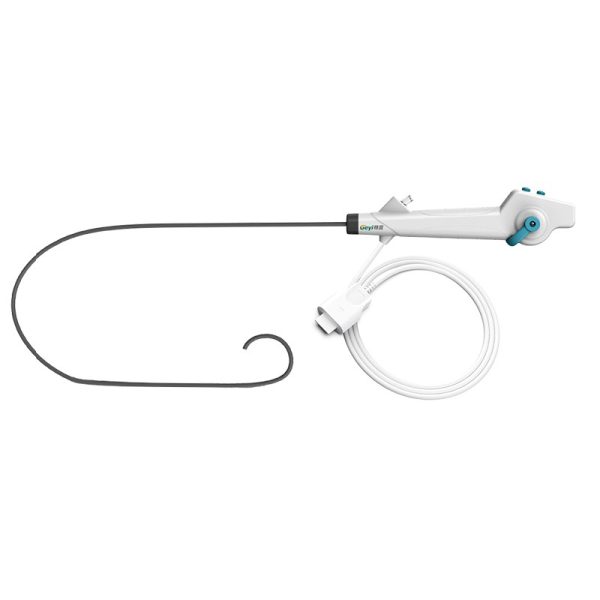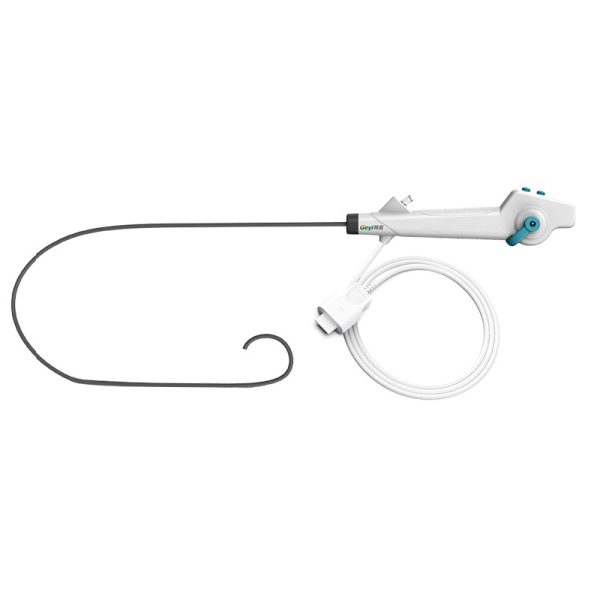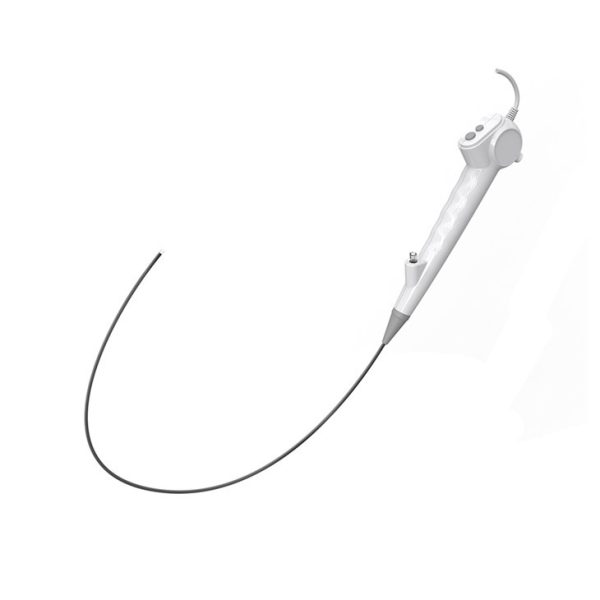
Single Use Choledochoscope
A single-use choledochoscope is used to provide illumination and intuitive images in endoscopic surgery of the pancreatic ductal system and serves as a guide to diagnosis and management with accessories.
- ISO 13485
- FDA 510(k) clearance
- CE certification
- OEM / private label
Manufactured by Zhejiang Geyi Medical Devices Co., Ltd. under the Jumping Spider™ brand. Model-level certificates confirmed on request.
Product description
A single-use choledochoscope is used to provide illumination and intuitive images in endoscopic surgery of the pancreatic ductal system and serves as a guide to diagnosis and management with accessories.
Your Leading Geyi Medical Devices Supplier
Zhejiang Geyi Medical Devices Co., Ltd. is a high-tech company integrating R & D, production, sales and service. It's headquartered in Jiande, Hangzhou City. The company has established a research and development and production base of 20000 m² in Jiande. It has a clean workshop of 5000 m² and a laboratory of 500 m². The company has a sound quality management system and equipment with a high degree of automation of production processes and testing methods, the company has successfully passed the "Medical Device Production Quality Control", "Management Standard" system assessment, and obtained ISO13485 medical device quality management system certification; Its product series of disposable trocars, digital endoscopes, electrocoagulation surgical instrument , surgical stapler series, endoscopic image camera systems, medical equipment have obtained domestic registration certificates and EU CE certificates.
Why Choose Us
Competitive price
We have a professional purchasing team and costing team,trying to reduce costs and profits,and provide you with a good price.
24h online service
You can contact us to inquire about pre-sales, sales, and after-sales services, and we will give you a very satisfactory.We are at your service online 24 hours a day.
Quality control
For each process,we have strict inspection standards,and we always insist that quality is life.
One-stop Solution
With rich experience and one-to-one service,we can help you choose products and answer technical questions.

Single use choledochoscopes are a new and exciting development in endoscopic procedures. Designed for one-time use, these scopes eliminate the need for repetitive sterilization, which can be time-consuming and costly. This technology also offers improved visual clarity, making diagnoses and treatment more accurate. Additionally, single-use scopes reduce the risk of cross-contamination, making it a safer option for both patients and healthcare providers.

Disposable choledochoscope are a new and exciting development in endoscopic procedures. Designed for one-time use, these scopes eliminate the need for repetitive sterilization, which can be time-consuming and costly. This technology also offers improved visual clarity, making diagnoses and treatment more accurate. Additionally, single-use scopes reduce the risk of cross-contamination, making it a safer option for both patients and healthcare providers.

Flexible choledochoscope are a new and exciting development in endoscopic procedures. Designed for one-time use, these scopes eliminate the need for repetitive sterilization, which can be time-consuming and costly. This technology also offers improved visual clarity, making diagnoses and treatment more accurate. Additionally, single-use scopes reduce the risk of cross-contamination, making it a safer option for both patients and healthcare providers.
Advantages of Single Use Choledochoscope
It allows doctors to make a diagnosis.
An single use choledochoscope is used to diagnose conditions that affect the digestive system. Endoscopy can help identify ulcers, bleeding, celiac disease, blockages, inflammation, and tumors. It can help find the cause of unexplained symptoms, such as heartburn, abdonimal pain, bleeding, nausea, vomiting, and pain. An single use choledochoscope is more accurate than gastrointestinal X-rays for detecting abnormal growths such as cancer.
An single use choledochoscope is used to treat conditions.
AEndoscopy is used to treat digestive tract problems. If certain disorders are found during the procedure, it's often possible to treat them at the same time. Your gastroenterologist can pass special tools through the endoscope to treat problems in the patient's digestive system, such as removing a foreign object, widening a narrow esophagus, or clipping off a polyp.
An single use choledochoscope is a safe procedure.
An single use choledochoscope is a safe procedure. It's considered one of the safest medical procedures and carries a low level of risk. Rare complications include problems with sedation, bleeding, infection, and perforation, though these complications are generally associated with pre-existing conditions.
An single use choledochoscope is a quick procedure.
An single use choledochoscope is a quick procedure. An upper single use choledochoscope takes about 20 minutes. You will be awake during the procedure, but you will take medication to relax you (a sedative) before the test. You will remain in the recovery area 30 to 40 minutes after the procedure. Someone will have to drive you home afterward.
An single use choledochoscope isn't usually painful.
An single use choledochoscope is nothing to fear. The procedure is not usually painful, and most patients only experience mild discomfort, similar to a sore throat or indigestion. You may be given local anesthesia to numb a specific area of your body. It is safe to take acetaminophen for the minor discomfort after the procedure.

What is Single Use Choledochoscope
A single-use choledochoscope is used to provide illumination and intuitive images in endoscopic surgery of the pancreatic ductal system and serves as a guide to diagnosis and management with accessories.
How Single Use Choledochoscope Work
Single use choledochoscope are medical instruments used to examine the inside of the body, typically the digestive tract or airways. These instruments are equipped with a small camera and a light source, which allow doctors to visualize and capture images of the internal organs.
The single use choledochoscope itself is a long, thin tube that is inserted into the body through a natural orifice, such as the mouth or anus. As the single use choledochoscope is advanced, the camera and light source provide a live video feed of the area being examined. This allows doctors to identify any abnormalities or issues that may be present.
In addition to the camera and light source, some single use choledochoscopes also have specialized features, such as devices for taking biopsies or removing small tissue samples for further examination. These specialized tools are operated through the working channel of the single use choledochoscope, which is a small opening in the tube that allows other instruments to be passed through it while the single use choledochoscope is in place.
Single use choledochoscope are typically used to diagnose and treat medical conditions such as ulcers, inflammation of the digestive tract, and certain types of cancer. They are minimally invasive, meaning they do not require any incisions or stitches, and are generally very safe when used by trained medical professionals.
How to Maintain Single Use Choledochoscope
Pre-Clean Your Scope. Reprocessing begins in the procedure room. Pre-cleaning helps prevent the formation of any biofilm, so it's critical to start the cleaning process immediately after removing the insertion tube from the patient. If the remaining soil isn't removed promptly, it has the opportunity to dry which risks complete decontamination. To pre-clean, wipe the insertion tube, clear the air/water channels and soak in detergent solution. Note: make sure to remove all detachable components (air/water valve, suction valve, biopsy port cap) & soak in solution separately.
Perform a Leak-Test. Leak tests allow you to detect any damage to the external surface of the scope, as well as the internal channels. If you don't perform a leak test and the scope does have internal damage, this can lead to inadequate disinfection and even further damage to the single use choledochoscope. It is essential to perform a leak test after your scope has been pre-cleaned. For tips on performing a productive leak test, check out this past post.
Manually Brush & Flush. Manually cleaning the scope is a critical step in the disinfection process. When performing this step, the scope must completely immerse in the cleaner. During this step, it's time to put the previously detached components into the container to scrub them. When cleaning the exterior, use a soft brush or a lint free cloth. Make sure to thoroughly brush and flush any residue that may be lingering in the channels and ports, since residual matter can reduce the effectiveness of the sterilization process. Let teh scope and components soak in detergent for the time frame recommended in the manufacturer's manual.
Rinse & Dry. Thoroughly rinse the detergent from the single use choledochoscope with clean water. Next, use a lint-free cloth to wipe down the single use choledochoscope before drying the inside of the scope by pushing forced air through all the channels. The scope must be completely dry before moving onto the high-level disinfection process.
Disinfect. According to the manufacturer, follow reprocessing instructions for proper sterilization or high-level disinfection (HLD). Carefully review what equipment or chemicals are to be used so you can perform the most effective disinfection method. Once immersed in the solution, inject the solution through the channels and soak the scope for the recommended length of time. After soaking, use forced air to rid of any remaining disinfectant. Transfer the scope and components into a container of clean water and then remove scope & place onto a sterile towel. Dry with a lint-free cloth.
Flush with Alcohol. Flushing the scope with alcohol promotes drying of the channels to prevent any bacterial growth. Using 70% Ethyl or Isopropyl alcohol, aspirate through the channels by using the suction device. Then use forced air to dry out the remaining alcohol. Finally, use an alcohol-soaked, lint free cloth to wipe the exterior of the scope followed by drying ports with a cotton swab.
Store & Don't Forget to Document! When storing your scope, hang it in an uncoiled, vertical position to facilitate drying and prevent recontamination. Make sure there is enough room between devices so you can avoid damage caused by contact. For quality assurance purposes, it is highly recommended to maintain documentation throughout the entire process. Having this on record can be very helpful if there is ever a circumstance that requires you to backtrack, whether it be due to improper disinfection or a recall. You can find our best tips on documenting repairs to your scopes here.
Single Use Choledochoscope Are Typically Used for the Following Diagnostic and Therapeutic Purposes Within and Adjacent to the Gastrointestinal Tract:
Visually examining and diagnosing abnormalities and diseases such as polyps, ulcers, bleeding, inflammation, lesions, and cancer.
Imaging organs within and adjacent to the gastrointestinal tract using ultrasound. This technique is known as endoscopic ultrasound (EUS) and the single use choledochoscopes are often known as echosingle use choledochoscopes. Endoscopic ultrasound is used to guide many endoscopic therapeutic procedures.
Performing biopsies using instruments inserted through the single use choledochoscope's working channel. Fine needle aspiration (FNA) is a type of biopsy used to collect samples from the gastrointestinal wall, liver, pancreas, lymph nodes, and bile ducts.
Performing therapeutic procedures using instruments inserted through the single use choledochoscope's working channel. Such procedures include polypectomy, draining pancreatic pseudocysts, dilating or stenting structures which have become too narrow, tightening structures which have become too loose, performing injection therapy, performing laser and radiofrequency ablation, and stopping bleeding.
Performing physical manipulation using instruments inserted through the single use choledochoscope's working channel. Such procedures include removing swallowed objects and placing feeding tubes.
Can Cbd Stones Be Cleared Without Using a Single Use Choledochoscope?
Nonobstructing CBD stones < 4 mm in diameter are likely to pass into the duodenum spontaneously. Depending on stone size, it may be feasible to flush small stones into the duodenum. To do this, 1-2 mg of IV glucagon should be given to the patient in order to relax the sphincter of Oddi. After a short waiting period of approximately 2 minutes the biliary tree can be flushed with saline via the cholangiogram catheter, with confirmation via cholangiography of stone clearance.

How to Use the Single Use Choledochoscope
The distal end of the single use choledochoscope is inserted into the gastrointestinal tract and the user operates the controls on the proximal end.
Typical components at the distal end include:
Bending Section: This section can be articulated vertically and horizontally to navigate through the gastrointestinal tract.
Illumination Lens: Light produced by an external light source is transmitted via fiber optics and exits this lens. This light is then reflected and returned through the objective lens to form the image.
Objective Lens: Reflected light enters the objective lens. Fiber single use choledochoscopes transmit this light through the single use choledochoscope via fiber optics whereas video single use choledochoscopes capture the light using an imaging sensor within the distal tip.
Working Channel: This lumen allows endoscopic instruments to be inserted through the single use choledochoscope to perform procedures such as fine needle aspiration (FNA), drainage, injection, laser ablation, radiofrequency ablation, biopsy, polypectomy, and electrosurgical coagulation and cutting.
Gas, Fluid, and Suction Nozzle: This lumen allows insufflation, irrigation, and suction to optimize access and visibility within the gastrointestinal tract.
Clinical Applications for Single Use Choledochoscope
Recent market trends indicate that greatest market demand for single use choledochoscope will continue to be for hospital-based procedures, followed by diagnostic centers and lastly clinics. Clinical applications for single-use endoscopes span a wide range of diagnostic and therapeutic/surgical procedures: ENT, dentistry, bronchoscopy, gastroenterology (single-use colonoscopes and disposable gastroscopes), general surgery, cardiology, gynecology, urology, and orthopedics (arthroscopy).
Several emerging clinical applications can also leverage high-definition micro-camera video technology: aortic visualization for stent placement and capsule endoscopy delivery devices.
Our Factory
Zhejiang Geyi Medical Devices Co., Ltd. is a high-tech company integrating R & D, production, sales and service. It's headquartered in Jiande, Hangzhou City. The company has established a research and development and production base of 20000 m² in Jiande.


FAQ
Q: What is a Choledochoscope used for?
A: Surgical exploration of the common bile duct for gallstones is a common operation but carries a high residual stone rate. Conventional techniques for exploring the bile ducts are blind procedures. The surgeon cannot see what he is doing. Also there has been no reliable method for a postexploratory check of the bile ducts before closure, usually around a T-tube. Operative choledochoscopy allows the surgeon to see stones in the duct, may aid the removal of stones and provides visual postexploratory checks that the common bile duct and the hepatic ducts are clear, that papilla is patent and that no stone is left behind before closure. A personal series of 150 patients had operative choledochoscopy using a flexible fibreoptic choledochoscope.
Q: What is the difference between Cholangioscope and Choledochoscope?
A: Choledochoscopy and cholangioscopy are used interchangeably in the literature. However, for this review, choledochoscopy refers to the extrahepatic biliary tree procedure, and cholangioscopy refers to the intrahepatic biliary tree procedure.
Q: What is a single-use endoscope?
A: Disposable Endoscopes / Single-use Endoscopes. Demand for single-use endoscopes has increased significantly even before the outbreak of the COVID-19 pandemic. Disposable devices assure patient-specific care while reducing risk of infection/contamination.
Q: How do they remove gallstones through an endoscopic procedure?
A: Alternatively, an endoscope (a narrow flexible tube equipped with a camera) is inserted through the mouth and into the small bowel to allow removal of the trapped gallstones from the common bile duct. This procedure can be performed before, during, and after the surgery to remove the gallbladder.
Q: What is choledochostomy?
A: noun,plural cho·led·o·chos·to·mies. Surgery. formation of a temporary opening through the abdominal wall into the common bile duct, usually to remove stones.
Q: What is minimally invasive surgery for cholecystolithiasis?
A: Laparoscopic cholecystectomy, also known as minimally invasive cholecystectomy, is performed through 4 small incisions with use of a camera to visualize the inside of the abdomen and long tools to remove the gallbladder. Surgery is done under anesthesia, and patients are asleep throughout the entire procedure.
Q: Is duodenoscopy same as endoscopy?
A: Duodenoscopes are specialized endoscopes that are used primarily for ERCP. They are side-viewing (rather than forward-viewing) endoscopes that have the advantage of looking at the major duodenal papilla en-face. Duodenoscopes have a lever that is used to manipulate an elevator located at the tip of the endoscope.
Q: What is the difference between benign and malignant CBD stricture radiology?
A: A benign stricture can be differentiated from a malignant one if it shows regular, symmetric and short segment narrowing. Irregular, asymmetric and long segment narrowing was more commonly found in malignant stricture.
Q: Which is better reusable or single-use endoscope?
A: Dependent on procedural volume, single-use endoscopes are typically more cost effective than reusable since they do not require disinfection and there are no maintenance costs associated with these devices, which removes any downtime related to repairs.
Q: What are the three types of endoscopy?
A: There are many types of endoscopy that view different organs. The most common types of endoscopy include colonoscopy, upper endoscopy and laparoscopy.
Q: What is the difference between an endoscope and an endoscopy?
A: Endoscopy (also called a gastroscopy) is a medical procedure that allows a doctor to observe the inside of the body without performing major surgery. An endoscope (fibrescope) is a long flexible tube with a lens at one end and a video camera at the other. The end with the lens is inserted into the patient.
Q: Can endoscopy remove stone from bile duct?
A: Bile duct stones are typically removed using endoscopic retrograde cholangiopancreatography (ERCP), a minimally invasive procedure that combines x-ray and upper endoscopy-an exam of the upper gastrointestinal tract, consisting of the esophagus, stomach and duodenum (the first part of the small intestine)-using an …
Q: How long are you put to sleep for an endoscopy?
A: During Your EGD: The procedure typically takes between 10 to 30 minutes. You will lie on your left side. An anesthesiologist will administer an intravenous (IV) sedative so you sleep through the procedure. A plastic mouth guard is placed between your teeth to prevent damage to your teeth.
Q: Are you asleep for an endoscopy and colonoscopy?
A: You won't be completely unconscious, but you'll sleep through the procedure and probably have no memory of it. The medication commonly used for deep sedation is propofol, which is not an opioid. It acts fast, wears off quickly, and is safe for most patients.
Q: What is the most advanced endoscope?
A: Our most advanced endoscopy system. The EVIS X1 endoscopy system introduces a range of technologies that aim to revolutionize the way physicians can detect, characterize and treat gastrointestinal disorders. As a leading medical technology company, we want to support every endoscopist. In every procedure.
Q: What is the new endoscopy procedure?
A: A capsule endoscopy procedure involves swallowing a tiny camera that's about the size of a large vitamin pill. The capsule contains lights to light up the digestive system, a camera to take images and an antenna that sends those images to a recorder worn on a belt.
Q: How long does it take for propofol to wear off after endoscopy?
A: It is possible that postprocedure testing at 1–2 hours after completion of procedure may confirm complete return of cognitive function to baseline. As noted above, patients who underwent endoscopy with Propofol had return of psychomotor speed and driving skills to baseline 2 hours after endoscopy.
Q: Do they use the same scope for endoscopy and colonoscopy?
A: A doctor can insert this tube through a tiny incision or an opening in the body, such as the mouth. A colonoscopy is a kind of endoscopy procedure that can examine the colon. A thin, flexible tube known as a colonoscope is inserted through the anus and into the colon.
Q: Can you have a CT scan instead of an endoscopy?
A: Virtual colonoscopy is also known as screening CT colonography. Unlike the usual or traditional colonoscopy, which needs a scope to be put into your rectum and advanced through your colon, virtual colonoscopy uses a CT scan to take hundreds of cross-sectional pictures of your belly organs.
Q: What is the new endoscopy technology?
A: Sebastian Schostek: The new capsule endoscopy technique will be able to replace the traditional gastroscopy procedure, where a thin, flexible tube called an endoscope is used to diagnose. Therapeutic interventions requiring the use of instruments will still involve a flexible endoscope.
Hot Tags: single use choledochoscope, China single use choledochoscope manufacturers, suppliers, factory, Single Use Flexible Ureteroscope, Ureteroscope, Video Endoscopy System, Flexible Hysteroscope, Gynaecology, Disposable Flexible Cystoscope