How to connect an endoscope to a monitor?
Connecting an endoscope to a monitor is a crucial process in various medical and industrial applications. As a…
Read article →

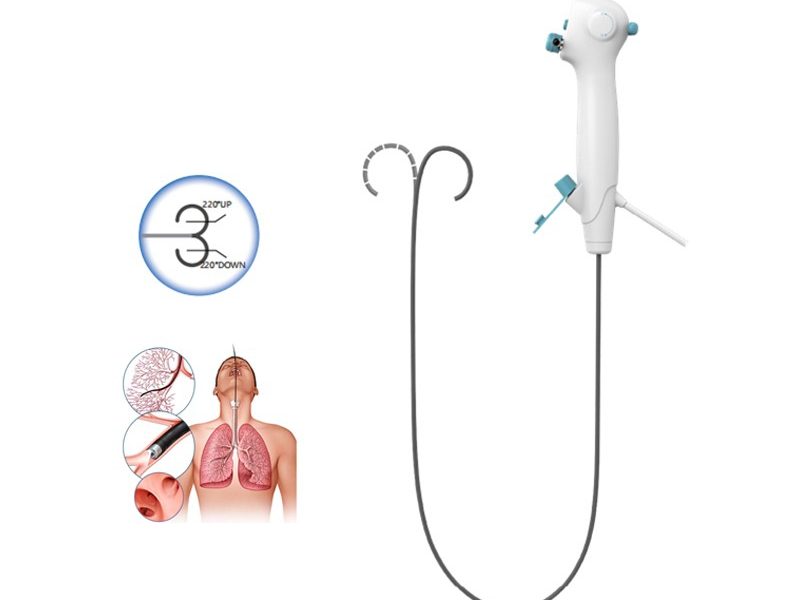
When it comes to diagnosing and treating various respiratory conditions, bronchoscopes play a pivotal role. As a professional bronchoscope supplier, I’ve had the privilege of witnessing firsthand the advancements in bronchoscope technology and understanding the different types available in the market. In this blog post, I’ll delve into the various types of bronchoscopes, their features, applications, and advantages.
Flexible bronchoscopes are widely used in the medical field due to their versatility and ease of use. These bronchoscopes are made of a flexible tube that can be navigated through the complex and delicate airways of the lungs with relatively little discomfort to the patient.
One of the most common types of flexible bronchoscopes is the Flexible Video Bronchoscope. This type of bronchoscope is equipped with a small camera at the distal end, which transmits high – resolution images to a monitor. The video capabilities allow the physician to visualize the inside of the airways clearly, identify abnormalities such as tumors, inflammation, or foreign bodies.
Flexible video bronchoscopes are also used for various therapeutic procedures. For example, they can be used to perform bronchoalveolar lavage (BAL), where a small amount of saline is injected into the lungs and then retrieved to analyze the cells and substances in the fluid. This can help in diagnosing conditions like pneumonia, interstitial lung diseases, and certain types of cancers.
Another advantage of flexible bronchoscopes is their ability to reach the peripheral airways. The flexible nature of the tube allows it to bend and navigate through the narrow passages of the bronchial tree. This is particularly useful in diagnosing conditions that affect the smaller airways, which may not be easily accessible with other imaging techniques.


Features such as a biopsy channel are also present in most flexible bronchoscopes. This channel allows the physician to pass small instruments through the bronchoscope to obtain tissue samples for further examination. The biopsy channel can also be used to deliver medications directly to the affected area in the lungs.
Rigid bronchoscopes, in contrast to flexible ones, are made of a rigid metal or plastic tube. They were the first type of bronchoscopes to be developed and are still used in certain situations.
Rigid bronchoscopes are typically used in cases where there is a need for a larger working channel. The larger channel allows for the passage of larger instruments, such as forceps for removing large foreign bodies or performing more extensive surgical procedures in the airways. For example, in cases of large airway tumors, a rigid bronchoscope may be used to perform a debulking procedure to reduce the size of the tumor.
They also offer better ventilation during the procedure. Since the rigid tube maintains a patent airway, it is possible to provide high – flow oxygen and mechanical ventilation more effectively compared to flexible bronchoscopes. This is especially important in patients who may have compromised respiratory function.
However, rigid bronchoscopes are more invasive and require general anesthesia in most cases. The procedure is also associated with a higher risk of complications such as airway trauma, bleeding, and pneumothorax. Therefore, they are usually reserved for specific indications where the benefits outweigh the risks.
In recent years, Disposable Bronchoscope have gained popularity in the medical community. These bronchoscopes are designed to be used once and then discarded, eliminating the need for costly and time – consuming reprocessing.
One of the main advantages of disposable bronchoscopes is infection control. Reprocessing reusable bronchoscopes can be a complex and rigorous process, and there is always a risk of cross – contamination if the reprocessing is not done correctly. Disposable bronchoscopes eliminate this risk by providing a clean, sterile instrument for each patient.
Disposable bronchoscopes are also convenient for emergency situations. Since they are ready to use out of the box, there is no need to wait for a reprocessed bronchoscope to be available. This can save valuable time, especially in cases where a quick diagnosis and treatment are required.
In terms of performance, disposable bronchoscopes are now comparable to their reusable counterparts. They are equipped with high – quality cameras and have features such as a working channel for biopsy and other procedures. Some disposable bronchoscopes are also flexible, allowing for easy navigation through the airways.
There are also several specialized bronchoscopes that are designed for specific applications.
Bronchoscope Flexible with special imaging capabilities, such as confocal laser endomicroscopy (CLE) or optical coherence tomography (OCT), are becoming more common. CLE allows for real – time, in – vivo microscopic imaging of the airway tissue, which can help in the early detection of cancer and other diseases at a cellular level. OCT provides high – resolution cross – sectional images of the airway walls, allowing for better visualization of the tissue layers and the detection of abnormalities.
Another type is the pediatric bronchoscope. These bronchoscopes are smaller in diameter and are specifically designed for use in children. They have features that take into account the smaller size and more delicate airways of pediatric patients, ensuring a safe and effective examination.
In conclusion, the different types of bronchoscopes offer a wide range of options for diagnosing and treating respiratory conditions. Whether it’s the flexibility and video capabilities of the flexible bronchoscope, the large working channel of the rigid bronchoscope, the infection – control benefits of the disposable bronchoscope, or the specialized imaging features of the advanced bronchoscopes, each type has its own unique advantages.
As a bronchoscope supplier, I understand the importance of providing high – quality, reliable bronchoscopes to meet the diverse needs of medical professionals. If you are interested in learning more about our range of bronchoscopes or are considering a purchase for your medical facility, I encourage you to reach out. We are committed to providing excellent customer service and support throughout the procurement process.
 Blog
Blog
 Blog
Blog
 Blog
Blog