Can a portable cystoscope be used for patients with special anatomical structures?
Can a portable cystoscope be used for patients with special anatomical structures? As a supplier of Portable Cystoscopes,…
Read article →

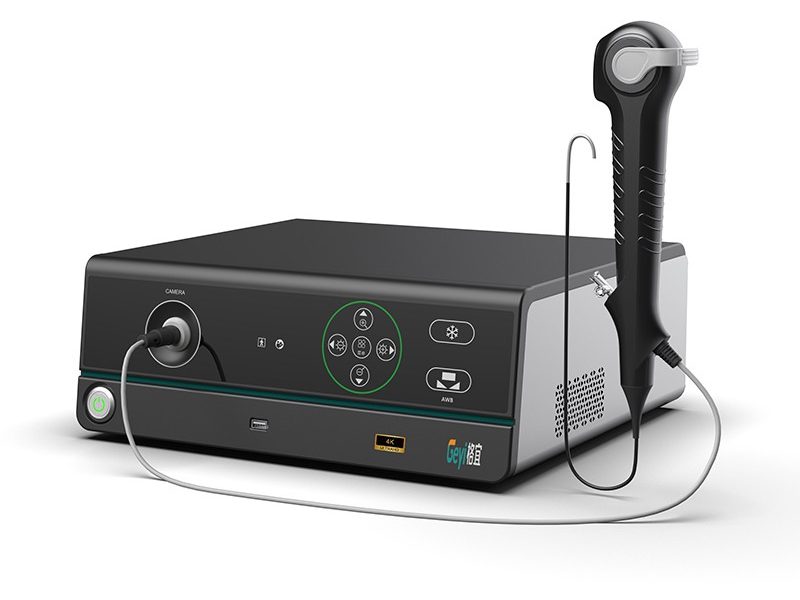
Resolution is a fundamental concept in the field of endoscope systems, playing a pivotal role in determining the quality and effectiveness of medical imaging. As a trusted supplier of endoscope systems, we understand the significance of resolution and its impact on medical diagnosis and treatment. In this blog post, we will delve into the intricacies of resolution in endoscope systems, exploring its definition, importance, and the factors that influence it.
Resolution refers to the ability of an endoscope system to distinguish between two closely spaced objects as separate entities. In simpler terms, it measures the level of detail that can be captured and displayed in an image. A higher resolution endoscope system can provide clearer, sharper, and more detailed images, allowing medical professionals to detect and diagnose medical conditions with greater accuracy.
There are two main types of resolution in an endoscope system: spatial resolution and contrast resolution. Spatial resolution refers to the ability of the system to resolve small details in the image, such as the size and shape of anatomical structures. It is typically measured in line pairs per millimeter (lp/mm), with a higher value indicating a higher spatial resolution. Contrast resolution, on the other hand, refers to the ability of the system to distinguish between different levels of brightness or contrast in the image. It is important for detecting subtle differences in tissue density and color, which can be indicative of medical conditions.
The resolution of an endoscope system is crucial for accurate medical diagnosis and treatment. High-resolution images can provide detailed information about the structure and function of internal organs and tissues, allowing medical professionals to detect and diagnose a wide range of medical conditions, including tumors, ulcers, and inflammation. In addition, high-resolution images can also help medical professionals plan and perform minimally invasive surgical procedures with greater precision and accuracy.
For example, in the field of gastroenterology, high-resolution endoscopy can be used to detect early-stage gastrointestinal cancers, which are often difficult to detect with traditional imaging techniques. By providing detailed images of the lining of the digestive tract, high-resolution endoscopy can help medical professionals identify small lesions and abnormalities that may not be visible with lower-resolution systems. This can lead to earlier diagnosis and treatment, which can significantly improve patient outcomes.
In the field of urology, high-resolution endoscopy can be used to diagnose and treat a variety of urinary tract conditions, including bladder cancer, kidney stones, and urinary incontinence. By providing detailed images of the urinary tract, high-resolution endoscopy can help medical professionals identify the location and extent of the disease, as well as the best treatment options for each patient.
Several factors can affect the resolution of an endoscope system, including the type of imaging sensor, the quality of the optical components, and the processing algorithms used to enhance the image.
The imaging sensor is the heart of an endoscope system, responsible for capturing the light reflected from the internal organs and tissues and converting it into an electrical signal. The type and quality of the imaging sensor can have a significant impact on the resolution of the system.
There are two main types of imaging sensors used in endoscope systems: charge-coupled devices (CCDs) and complementary metal-oxide-semiconductor (CMOS) sensors. CCD sensors have been used in endoscope systems for many years and are known for their high sensitivity and low noise levels. However, they are also more expensive and consume more power than CMOS sensors. CMOS sensors, on the other hand, are newer and more cost-effective, and they offer several advantages over CCD sensors, including lower power consumption, faster readout speeds, and better integration with other components of the endoscope system.
The optical components of an endoscope system, including the lens, the light guide, and the fiber optic bundle, are responsible for transmitting the light from the light source to the internal organs and tissues and for collecting the reflected light and transmitting it to the imaging sensor. The quality of the optical components can have a significant impact on the resolution of the system.
A high-quality lens can provide a clear and sharp image, with minimal distortion and aberration. The light guide and fiber optic bundle should also be of high quality, with low attenuation and high transmission efficiency. In addition, the design of the optical components should be optimized to minimize the amount of light loss and to ensure that the light is evenly distributed across the field of view.
The processing algorithms used to enhance the image can also have a significant impact on the resolution of the endoscope system. These algorithms can be used to improve the contrast, sharpness, and color accuracy of the image, as well as to reduce noise and artifacts.


There are several types of processing algorithms used in endoscope systems, including digital signal processing (DSP), image enhancement, and noise reduction algorithms. DSP algorithms are used to convert the electrical signal from the imaging sensor into a digital image, while image enhancement algorithms are used to improve the quality of the image by adjusting the contrast, brightness, and color balance. Noise reduction algorithms are used to reduce the amount of noise and artifacts in the image, which can improve the clarity and sharpness of the image.
As a leading supplier of endoscope systems, we offer a wide range of high-resolution endoscope systems that are designed to meet the needs of medical professionals in a variety of specialties. Our endoscope systems are equipped with the latest imaging sensors, optical components, and processing algorithms, providing clear, sharp, and detailed images of the internal organs and tissues.
Our Endoscopy Camera System is a state-of-the-art system that offers high-resolution imaging and advanced features, such as digital zoom, image freeze, and video recording. The system is easy to use and can be customized to meet the specific needs of each patient.
Our 4K Medical Endoscope Camera System is a revolutionary system that offers ultra-high-resolution imaging, with four times the resolution of traditional HD systems. The system is designed to provide detailed images of the internal organs and tissues, allowing medical professionals to detect and diagnose medical conditions with greater accuracy.
Our Laparoscopic Camera System is a high-performance system that offers high-resolution imaging and advanced features, such as 3D imaging, image stabilization, and real-time feedback. The system is designed to provide clear and detailed images of the abdominal cavity, allowing medical professionals to perform minimally invasive surgical procedures with greater precision and accuracy.
If you are interested in learning more about our high-resolution endoscope systems or if you have any questions about resolution in endoscope systems, please contact us. Our team of experts is available to provide you with detailed information about our products and to help you choose the right endoscope system for your needs. We look forward to working with you to improve the quality of medical imaging and to enhance patient care.
 Blog
Blog
 Blog
Blog