Is a 4K Laparoscopy System better than a regular laparoscopy system?
Hey there! As a supplier of 4K Laparoscopy Systems, I’ve been getting a ton of questions lately about…
Read article →

Can a hysteroscopy be done on an outpatient basis?
Hysteroscopy is a valuable diagnostic and therapeutic procedure in gynecology that allows direct visualization of the uterine cavity. One of the frequently asked questions by patients and healthcare providers alike is whether a hysteroscopy can be performed on an outpatient basis. In this blog post, we’ll explore the feasibility, benefits, and considerations of outpatient hysteroscopy, while also highlighting our offerings as a leading hysteroscope supplier.
Outpatient hysteroscopy has become increasingly common in recent years due to advancements in technology and improved patient care protocols. With the use of modern, minimally invasive hysteroscopes, many hysteroscopic procedures can be safely and effectively carried out in an outpatient setting.
The key to successful outpatient hysteroscopy lies in careful patient selection. Generally, patients who are in good overall health, with no significant comorbidities, and who are undergoing relatively straightforward diagnostic or minor therapeutic hysteroscopic procedures are suitable candidates for outpatient management. For example, diagnostic hysteroscopy to evaluate abnormal uterine bleeding, investigate intrauterine adhesions, or assess the uterine cavity before fertility treatments can often be performed on an outpatient basis.
Outpatient procedures are typically more cost – effective than inpatient procedures. Since patients do not require an overnight hospital stay, there are significant savings on hospital room charges, nursing care, and other inpatient – related expenses. This can be a major advantage for both patients and healthcare systems, especially in an era of rising healthcare costs.
For patients, outpatient hysteroscopy offers greater convenience. They can return home on the same day of the procedure, which minimizes disruption to their daily lives. There is no need to arrange for long – term childcare, take extended time off work, or deal with the unfamiliar environment of a hospital overnight.
Staying in a hospital environment for an extended period increases the risk of acquiring hospital – acquired infections. By having the hysteroscopy as an outpatient, patients are exposed to these risks for a much shorter time, reducing their chances of developing post – procedural infections.
Proper patient education is crucial before an outpatient hysteroscopy. Patients need to understand the procedure, what to expect during and after the hysteroscopy, and any potential complications. They should also be aware of the importance of having someone accompany them home after the procedure, as they may be groggy from the anesthesia.
The choice of anesthesia for outpatient hysteroscopy is an important consideration. Local anesthesia is often preferred for outpatient procedures as it allows the patient to remain awake and alert during the hysteroscopy, and there is a lower risk of complications compared to general anesthesia. However, in some cases, where the procedure is more complex or the patient has a low pain tolerance, a light sedation or regional anesthesia may be used.
Even though it is an outpatient procedure, patients need to be monitored closely after the hysteroscopy. They should be observed for any signs of excessive bleeding, pain, or other complications before being discharged. Adequate post – procedural instructions should be provided, including information on pain management, activity restrictions, and when to seek medical help.
As a leading hysteroscope supplier, we offer a range of high – quality hysteroscopes that are well – suited for outpatient hysteroscopy procedures.
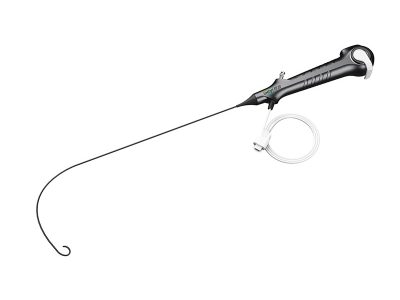
Our Disposable Hysteroscope provides a cost – effective and hygienic solution for outpatient settings. Disposable hysteroscopes eliminate the need for expensive reprocessing and sterilization, reducing the risk of cross – contamination between patients. They are also lightweight and easy to use, making them ideal for busy outpatient clinics.
The Portable Hysteroscope is another great option for outpatient hysteroscopy. Its portability allows for easy transportation between different examination rooms or even to remote locations. This is especially useful for clinics that may need to perform hysteroscopies in different areas or for mobile healthcare units.
Our Single Use Hysteroscope combines the benefits of disposability and high – quality optics. Single – use hysteroscopes ensure optimal performance for each patient, and they are designed to be used once and then discarded, eliminating the potential for equipment – related infections.
In conclusion, outpatient hysteroscopy is a feasible and beneficial option for many patients undergoing diagnostic or minor therapeutic hysteroscopic procedures. With careful patient selection, proper anesthesia, and adequate post – procedural monitoring, outpatient hysteroscopy can provide a safe, cost – effective, and convenient alternative to inpatient procedures.


If you are a healthcare provider interested in improving your outpatient hysteroscopy services or looking for high – quality hysteroscopes, we invite you to contact us for a procurement discussion. Our team of experts is ready to assist you in finding the best hysteroscope solutions for your needs.
 Blog
Blog