What are the main components of a single use bronchoscope?
As a supplier of Single Use Bronchoscopes, I am often asked about the main components of these essential…
Read article →

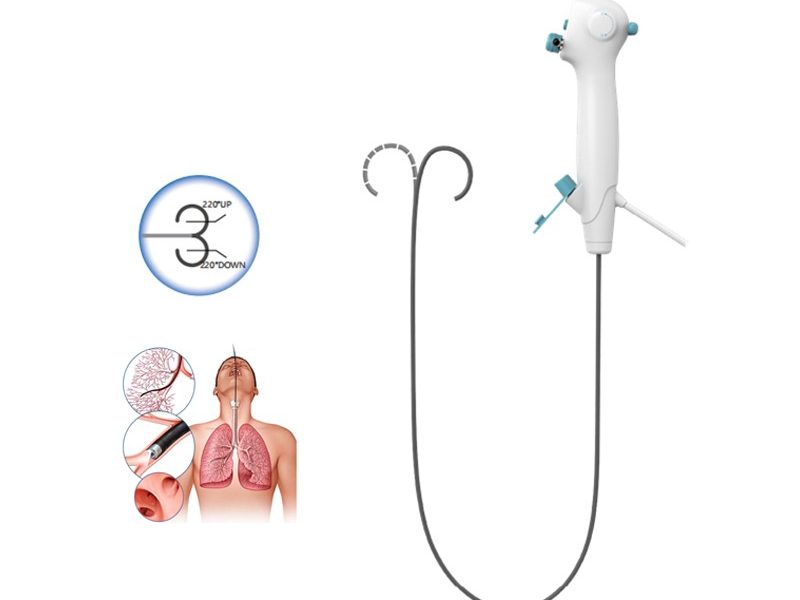
As a dedicated provider of high – quality bronchoscopes, I am often asked a crucial question: Can a bronchoscope be used to obtain tissue samples for biopsy? This blog post aims to delve into this topic comprehensively, exploring the capabilities of bronchoscopes in biopsy procedures, the types of bronchoscopes suitable for such tasks, and the significance of these procedures in medical diagnosis.
Bronchoscopy is a well – established medical procedure that involves the insertion of a bronchoscope, a thin, flexible tube equipped with a light and camera, into the airways. This allows physicians to visualize the trachea, bronchi, and bronchioles directly. One of the most important applications of bronchoscopy is to obtain tissue samples for biopsy.
Biopsy is a critical diagnostic tool in medicine. It involves the collection of cells or tissues from the body for examination under a microscope. In the context of respiratory diseases, a bronchoscopic biopsy can help in the diagnosis of various conditions, including lung cancer, infections, and interstitial lung diseases.
When a bronchoscope is used for biopsy, it can reach deep into the lungs through the natural airways. Specialized biopsy tools, such as forceps, needles, or brushes, can be passed through the working channel of the bronchoscope. Forceps are commonly used to grasp tissue fragments, while needles can be used for fine – needle aspiration (FNA), which involves extracting cells from a lesion. Brushes are used to collect cells from the surface of a suspicious area.
There are different types of bronchoscopes available, each with its own features and suitability for biopsy procedures:
Flexible bronchoscopes are the most commonly used type in clinical practice. Their flexibility allows them to navigate through the complex and tortuous airways with relative ease. They are well – suited for reaching peripheral lung lesions and can be used for both diagnostic and therapeutic purposes. The Bronchoscope Flexible we offer is designed with high – quality materials and advanced imaging technology. It provides clear visualization of the airways, which is essential for accurate biopsy sampling. The large working channel of our flexible bronchoscopes can accommodate a variety of biopsy instruments, making it a reliable choice for obtaining tissue samples.
Single – use bronchoscopes have gained popularity in recent years. They offer several advantages, especially in terms of infection control. Since they are discarded after a single use, there is no risk of cross – contamination between patients. This is particularly important in biopsy procedures, as any contamination could potentially affect the accuracy of the diagnostic results. Our Single Use Bronchoscope is designed to provide the same level of performance as reusable bronchoscopes. It is pre – sterilized and ready to use, which saves time in the operating room and reduces the burden of cleaning and reprocessing.
Disposable bronchoscopes are similar to single – use bronchoscopes but are often more cost – effective. They are a great option for healthcare facilities with limited resources or those that perform a large number of bronchoscopy procedures. Our Disposable Bronchoscope is manufactured with high – precision technology to ensure reliable performance. It can be used effectively for obtaining tissue samples for biopsy, providing a cost – efficient solution without compromising on quality.
The process of obtaining tissue samples using a bronchoscope typically involves the following steps:
In conclusion, bronchoscopes can indeed be used to obtain tissue samples for biopsy, and they play a vital role in the diagnosis of respiratory diseases. Whether you choose a flexible, single – use, or disposable bronchoscope, each type has its own advantages and can be effectively used for this purpose. At our company, we are committed to providing high – quality bronchoscopes that meet the diverse needs of healthcare providers.


If you are interested in learning more about our bronchoscopes or would like to discuss potential procurement opportunities, please feel free to contact us. We are always ready to provide you with detailed product information and support your decision – making process.
 Blog
Blog
 Blog
Blog