Can a flexible hysteroscope be used in women who have had a hysterectomy?
As a supplier of Flexible Hysteroscopes, I often encounter various inquiries from medical professionals regarding the applications and…
Read article →

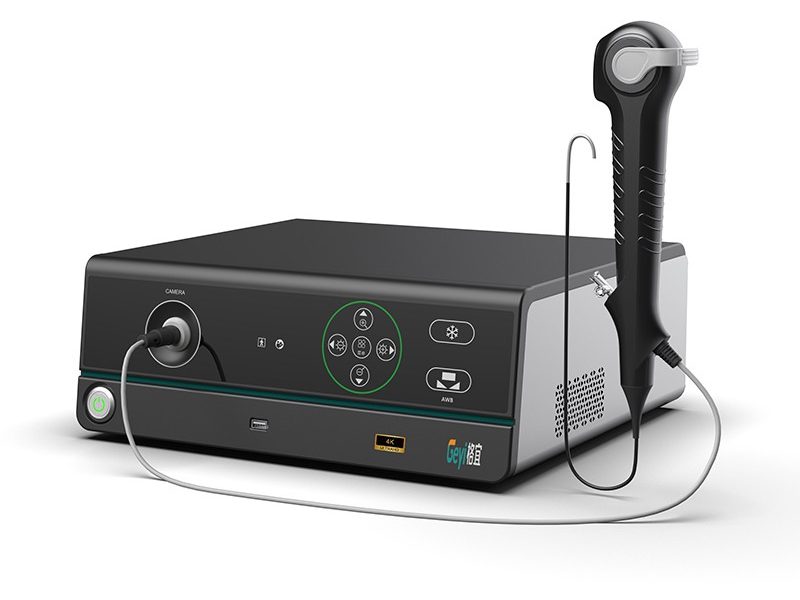
In the realm of modern medicine, endoscopy camera systems have revolutionized the way doctors diagnose and treat various conditions. As a leading supplier of Endoscopy Camera System, I am often asked about how these remarkable devices transmit images from the inside of the body to the display monitors in the examination room. In this blog post, I will delve into the fascinating world of endoscopy camera system image transmission, exploring the technologies and processes involved.
Before we dive into the details of image transmission, let’s briefly review the basic components of an endoscopy camera system. An endoscope is a long, flexible tube equipped with a light source, a camera, and a channel for instruments. The camera at the tip of the endoscope captures high – resolution images of the internal organs and tissues. These images are then transmitted to an external processing unit, which enhances and displays them on a monitor for the medical team to analyze.
The first step in the image – transmission process is the capture of images at the tip of the endoscope. Most modern endoscopy cameras use charge – coupled device (CCD) or complementary metal – oxide – semiconductor (CMOS) image sensors. These sensors are extremely sensitive to light and can convert the incoming light into electrical signals.
CCD sensors have been used in endoscopy for many years. They offer high image quality, low noise, and excellent color reproduction. CCD sensors work by collecting photons of light on a grid of pixels. Each pixel accumulates an electrical charge proportional to the amount of light it receives. Once the exposure is complete, the charges are transferred from one pixel to the next and finally read out as an electrical signal.
CMOS sensors, on the other hand, are a more recent development. They are more power – efficient and can be integrated with other electronic components on a single chip. CMOS sensors also have the advantage of being able to read out the pixels individually, which allows for faster image capture and lower power consumption. In many cases, CMOS sensors can provide comparable image quality to CCD sensors, making them a popular choice for modern endoscopy camera systems.
Once the image sensors at the tip of the endoscope have converted the light into electrical signals, these signals need to be transmitted to the external processing unit. There are two main methods for transmitting these signals: wired and wireless.
Wired transmission is the most common method used in endoscopy camera systems. The electrical signals from the image sensor are sent through a bundle of fine wires within the endoscope tube. These wires are designed to minimize signal loss and interference.
The bundle of wires, known as the cable, is connected to the external processing unit at the proximal end of the endoscope. Inside the processing unit, the electrical signals are amplified, digitized, and processed to enhance the image quality. The digitized image data is then sent to the display monitor for viewing.
One of the advantages of wired transmission is its reliability. Since the signals are transmitted through a physical cable, there is less risk of interference or signal loss compared to wireless transmission. However, the cable can be cumbersome and may limit the movement of the endoscope during the procedure.
Wireless transmission is a newer technology that is becoming increasingly popular in endoscopy. Instead of using a cable to transmit the electrical signals, wireless endoscopy camera systems use radio frequency (RF) or infrared (IR) signals to send the image data from the endoscope to the external processing unit.
RF wireless transmission uses radio waves to transmit the image data. The endoscope is equipped with a small transmitter that sends the data to a receiver connected to the external processing unit. RF wireless transmission offers greater flexibility and mobility during the procedure, as there is no cable to restrict the movement of the endoscope. However, it requires careful management of the RF spectrum to avoid interference from other electronic devices.
IR wireless transmission uses infrared light to transmit the image data. The endoscope has an IR transmitter that sends the data to an IR receiver on the external processing unit. IR wireless transmission is less susceptible to interference from other RF sources, but it has a shorter range and requires a direct line – of – sight between the transmitter and the receiver.
Once the image data has been transmitted to the external processing unit, it undergoes a series of processing steps to enhance the image quality. The processing unit typically includes a digital signal processor (DSP) that performs tasks such as noise reduction, color correction, and contrast enhancement.
The processed image data is then sent to the display monitor. Most modern endoscopy camera systems support high – definition (HD) and even 4K resolution displays. 4K Medical Endoscope Camera System offers incredibly detailed and sharp images, allowing doctors to detect even the smallest abnormalities in the internal organs.
The display monitor can be a dedicated medical monitor or a standard computer monitor. Medical monitors are designed to meet strict quality and safety standards and are optimized for displaying medical images. They offer high brightness, contrast, and color accuracy, which are essential for accurate diagnosis.
In addition to the basic image – transmission technologies, modern endoscopy camera systems are equipped with a range of advanced features. For example, some systems use image – guided navigation technology to help doctors precisely locate the endoscope within the body. This technology uses real – time image data and pre – operative imaging studies to create a virtual map of the internal organs, allowing for more accurate and targeted procedures.
Another advanced feature is the ability to capture 3D images. 3D endoscopy camera systems use two or more cameras at the tip of the endoscope to capture stereo images. These images are then processed to create a 3D representation of the internal organs, providing doctors with a more immersive and detailed view of the anatomical structures.
Looking to the future, we can expect to see further advancements in endoscopy camera system technology. For example, researchers are exploring the use of nanotechnology to develop even smaller and more sensitive image sensors. These sensors could be integrated into tiny endoscopic devices that can be swallowed by the patient, allowing for non – invasive imaging of the digestive tract.


In conclusion, the transmission of images in an endoscopy camera system is a complex process that involves multiple steps, from image capture at the tip of the endoscope to display on the monitor. Whether using wired or wireless transmission, the goal is to provide doctors with high – quality, real – time images of the internal organs to aid in diagnosis and treatment.
As a supplier of Endoscope Camera System, we are committed to providing the latest and most advanced technology to our customers. Our endoscopy camera systems are designed to offer superior image quality, reliability, and ease of use.
If you are interested in learning more about our endoscopy camera systems or would like to discuss a potential purchase, we encourage you to reach out to us. Our team of experts is ready to assist you in finding the right solution for your medical practice. We look forward to the opportunity to work with you and contribute to the advancement of medical imaging technology.
 Blog
Blog
 Blog
Blog
 Blog
Blog